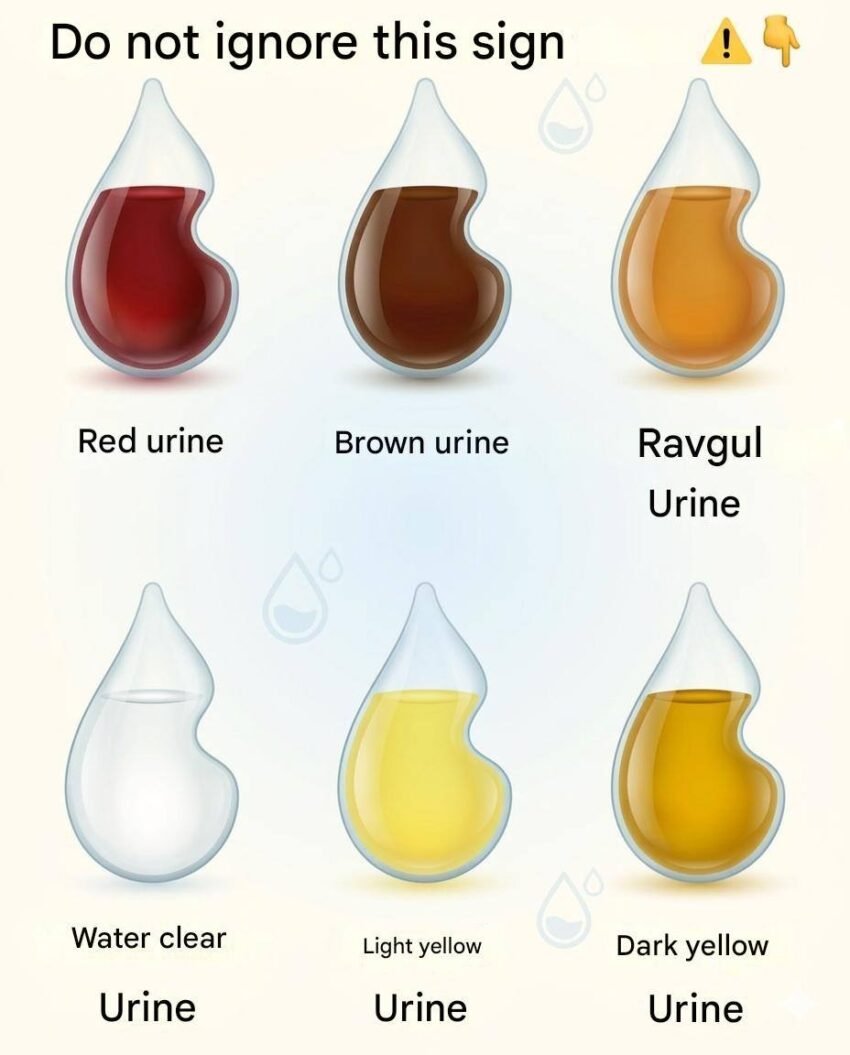
Urine color can give useful clues about hydration and sometimes health, but it’s not a diagnosis on its own. The key idea is: changes that persist or come with symptoms matter most.
Here’s what different colors may indicate:
💛 Pale yellow (straw-colored)
- ✅ Normal and healthy
- Well-hydrated body
- Ideal range
💛 Dark yellow / amber
- ⚠️ Often dehydration
- You may need more fluids
- Common after sweating, fasting, or illness
🟠 Orange
Possible causes:
- Dehydration
- Certain vitamins (especially B-complex)
- Some medications
- Rarely, liver or bile issues if persistent
🔴 Pink or red
Can be caused by:
- Beets, berries, or food dyes
- But also possibly blood in urine (important)
May relate to Hematuria, which needs medical evaluation if unexplained.
🟤 Brown / tea-colored
Possible causes:
- Severe dehydration
- Liver or bile problems
- Muscle breakdown (rare but serious)
🟢 Blue or green (rare)
- Certain medications or dyes
- Rare bacterial infections
- Usually not dangerous but should be checked if unexplained
⚪ Cloudy urine
- May indicate mild infection or crystals
- Could also be dehydration or diet-related
⚠️ When to worry
See a doctor if:
- Blood appears without clear food cause
- Color changes last more than a few days
- You have pain, burning, fever, or back pain
- Urine is persistently dark or foamy
🧠 Important reality check
Urine color mainly reflects:
- Hydration level
- Diet (beets, vitamins, food dyes)
- Medications
It is not a standalone diagnostic tool.
⚖️ Bottom line
Most urine color changes are harmless and related to hydration or diet—but red, brown, or persistent unusual colors should always be checked.
If you want, I can give you a simple “hydration chart” or explain what foamy urine means specifically, since that’s another common concern.