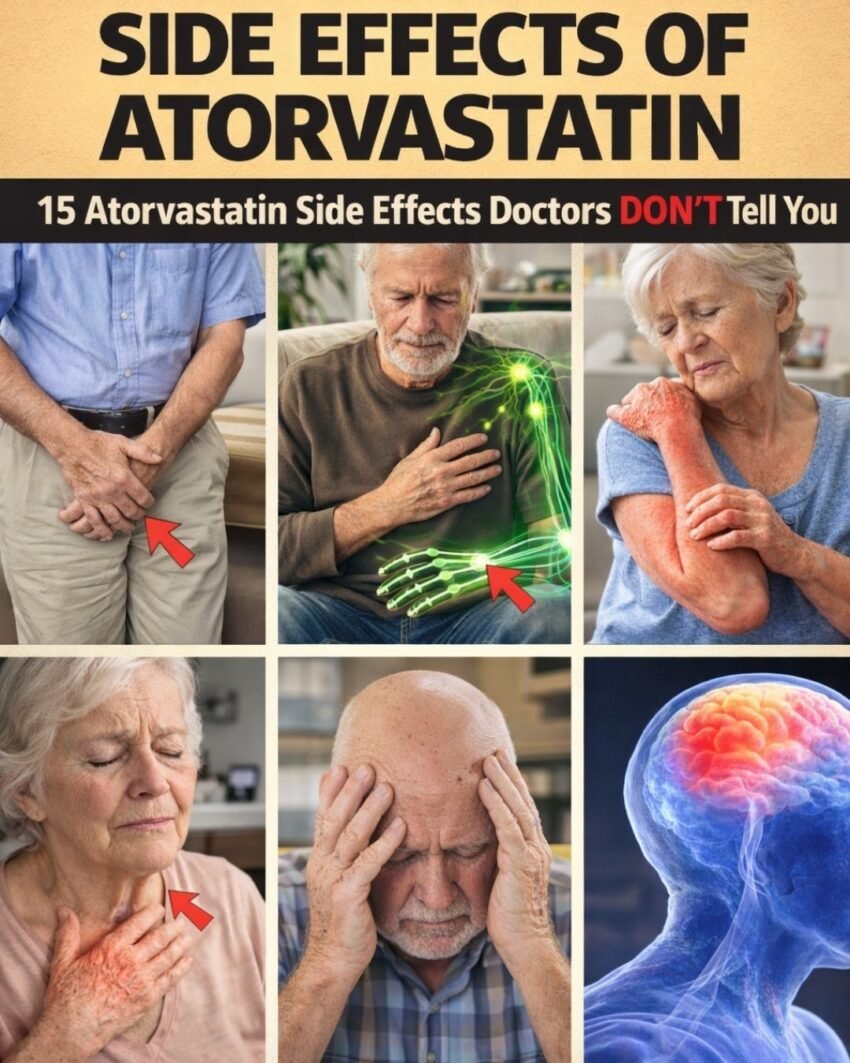
That headline is designed to scare. Atorvastatin is one of the most studied heart medications in the world. Doctors do discuss its side effects—the internet just tends to exaggerate them.
Let’s separate real, known effects from hype.
🫀 Why people take atorvastatin
It lowers LDL (“bad” cholesterol) and reduces the risk of:
- Heart attack
- Stroke
- Complications from Atherosclerosis
For many people, the benefits clearly outweigh the risks.
⚠️ Common side effects (usually mild)
- Muscle aches or soreness
- Headache
- Mild digestive issues (nausea, constipation)
These are typically manageable and often go away.
🚨 Less common but important side effects
💪 1. Muscle injury
- Persistent pain, weakness, or dark urine
- Rare severe form: Rhabdomyolysis
🧪 2. Liver enzyme changes
- Usually mild and picked up on blood tests
- Serious liver damage is rare
🧠 3. Memory or cognitive complaints
- Some people report “brain fog”
- Evidence is mixed; effects are usually reversible
🩸 4. Slight increase in blood sugar
- Can contribute to risk of Type 2 Diabetes in some people
- Risk is small compared to heart protection benefits
⚠️ Things that increase side effect risk
- High doses
- Mixing with certain medications
- Drinking large amounts of grapefruit juice
- Older age or existing health issues
🚫 What’s misleading in “15 hidden side effects” lists
- They often include rare or unproven symptoms
- Make normal, mild effects sound dangerous
- Ignore how much statins reduce heart attack and stroke risk
🧠 What you should actually do
- Take it as prescribed
- Report new muscle pain or unusual symptoms
- Get periodic blood tests if advised
- Don’t stop suddenly without medical advice
⚖️ Bottom line
Atorvastatin can have side effects—but serious ones are uncommon, and the medication is proven to save lives. Viral posts tend to amplify fear more than facts.
If you want, tell me your dose or symptoms—I can help you figure out what’s normal, what to watch, and when to talk to your doctor.