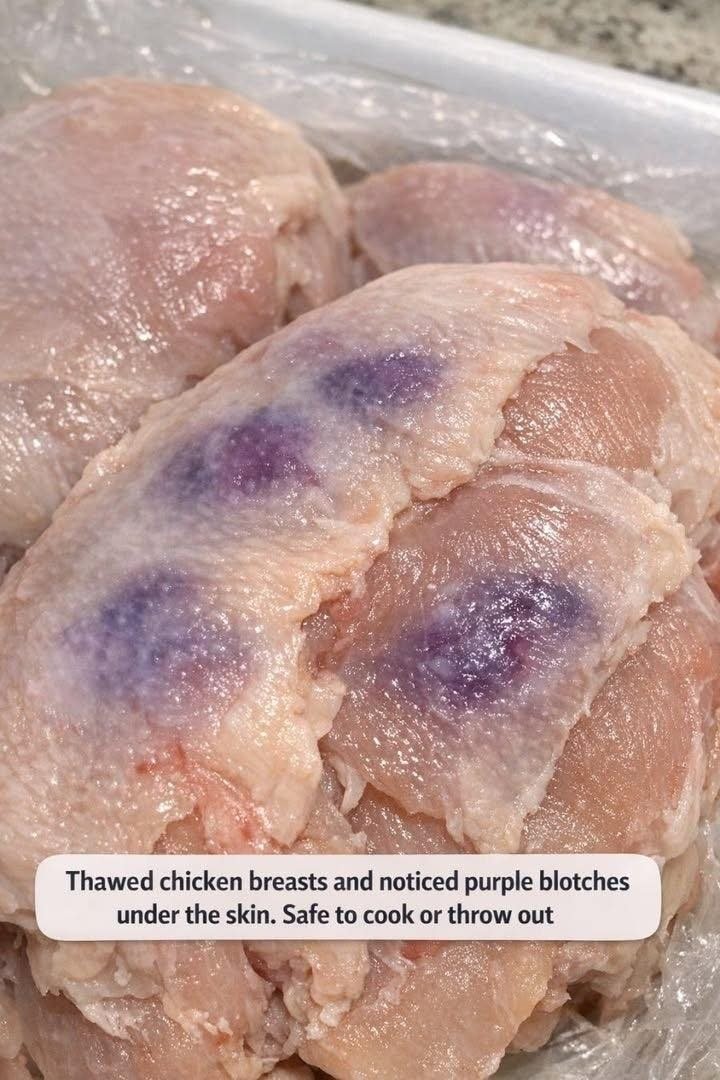
Purple or dark blotches under the skin of thawed chicken aren’t automatically a sign it’s unsafe—but you do need to evaluate a few things before deciding.
🟣 What those purple spots might be
- Bruising or blood pooling: This can happen during processing or freezing. It often shows up as purple/red patches under the skin.
- Bone marrow seepage: Especially in younger chickens, pigment can leak into surrounding tissue and look dark or purplish after thawing.
These are usually harmless if the meat is otherwise fresh.
🚫 When you should throw it out
Don’t take chances if you notice any of these:
- Strong sour or rotten smell
- Slimy or sticky texture
- Gray/green discoloration (not just localized purple)
- Packaging was bloated or leaking before opening
- It’s been thawed too long (more than ~1–2 days in the fridge)
✅ When it’s likely safe
You can cook it if:
- It smells normal (mild, slightly meaty)
- Texture is firm, not slimy
- The purple areas are localized under the skin, not widespread spoilage
Cooking thoroughly (to an internal temp of 74°C / 165°F) will kill harmful bacteria—but it won’t fix spoiled meat, so the smell/texture check matters most.
⚖️ Bottom line
If it looks a bit off but passes the smell and texture test, it’s probably just bruising and safe to cook.
If you feel unsure at all, it’s smarter to discard it—food poisoning isn’t worth the risk.
If you want, you can describe the color, smell, and texture in more detail (or how long it’s been thawed), and I’ll give you a more confident call.