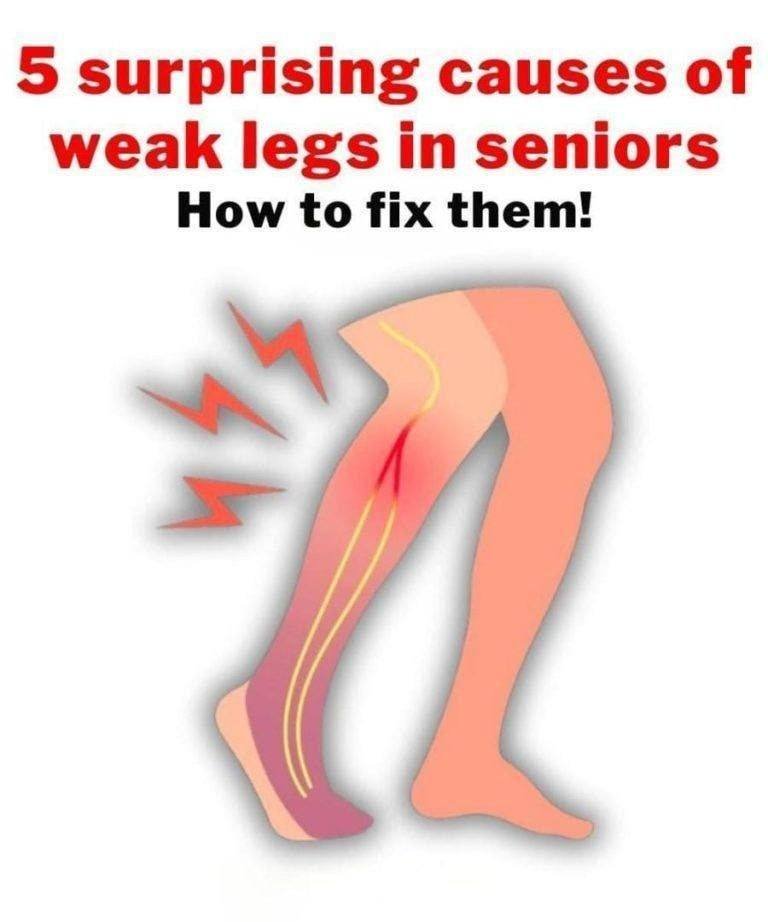
Weak legs in older adults aren’t always just “aging.” Several overlooked causes can reduce strength and balance—but many are manageable once identified.
Here are 5 surprising causes and what you can do about them:
🧠 1. Nerve Issues (Peripheral Neuropathy)
Damage to nerves—often linked to Diabetes—can cause weakness, tingling, or numbness in the legs.
What helps:
- Control blood sugar (if diabetic)
- Gentle exercises like walking or stretching
- Medical evaluation for nerve health
🥗 2. Vitamin Deficiencies
Low levels of nutrients like vitamin B12 or vitamin D can lead to muscle weakness and fatigue.
What helps:
- Blood tests to check levels
- Supplements if needed (doctor-guided)
- Foods like eggs, dairy, fish, and fortified cereals
💪 3. Muscle Loss (Sarcopenia)
Age-related muscle loss, known as Sarcopenia, can reduce leg strength and mobility.
What helps:
- Strength training (even light resistance bands)
- Adequate protein intake
- Staying physically active daily
💊 4. Medication Side Effects
Some medications—like statins or sedatives—can cause muscle pain or weakness.
What helps:
- Review medications with a doctor
- Adjust dosage or switch if necessary
- Never stop meds without guidance
❤️ 5. Poor Circulation
Conditions like Peripheral Artery Disease can reduce blood flow to the legs, causing weakness or cramping.
What helps:
- Regular walking to improve circulation
- Managing blood pressure and cholesterol
- Quitting smoking (if applicable)
⚠️ When to Take It Seriously
Get medical advice if there’s:
- Sudden or rapidly worsening weakness
- Frequent falls
- Pain, numbness, or imbalance
- Difficulty standing up from a chair
✅ Simple Daily Fixes That Help Most People
- Short daily walks (even 10–15 minutes)
- Chair exercises or light squats
- Balanced diet with enough protein
- Staying hydrated
- Regular checkups
If you want, I can put together a simple 7-day leg-strength plan for seniors or exercises that can be done safely at home.