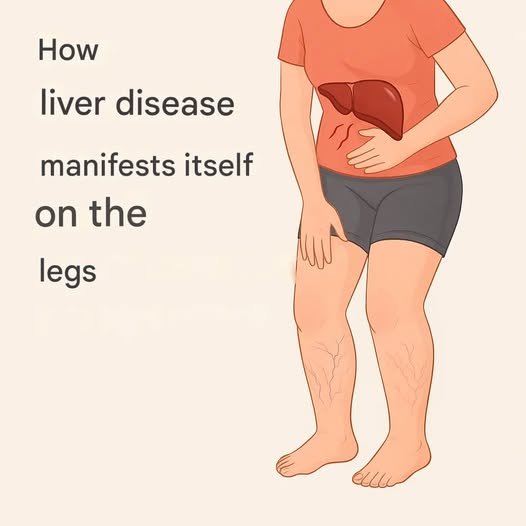
Your Legs Are Screaming “HELP!”: 5 Warning Signs From Your Liver
The liver is one of the most vital organs in the human body. It filters toxins, processes nutrients, produces bile, and regulates many essential chemical levels. When the liver begins to struggle, the warning signs are not always obvious — and surprisingly, your legs may reveal some of the earliest clues.
Here are five leg-related symptoms that may signal liver trouble.
1. Swelling in the Legs and Ankles (Edema)
One of the most common signs of advanced liver dysfunction is fluid buildup in the lower body.
When the liver is damaged, it may fail to produce enough albumin — a protein that helps keep fluid inside blood vessels. Low albumin levels can cause fluid to leak into surrounding tissues, leading to swelling in the feet, ankles, and legs.
What it feels like:
-
Tight or heavy legs
-
Puffy ankles
-
Indentations left after pressing on the skin
Persistent swelling should never be ignored, especially if accompanied by abdominal bloating.
2. Itchy Skin on the Lower Legs
Unexplained itching — particularly on the legs — may be linked to liver problems.
When bile flow is impaired, bile salts can accumulate in the bloodstream and deposit in the skin, causing irritation and intense itching.
Watch for:
-
Severe itching without rash
-
Symptoms worsening at night
-
Itching that does not respond to typical skin treatments
Chronic itching without a visible cause may warrant medical evaluation.
3. Spider Veins on the Legs
Spider veins are small, web-like blood vessels visible under the skin. While they are often harmless, a sudden increase in spider veins may indicate hormonal imbalance related to liver dysfunction.
A struggling liver may not properly metabolize estrogen, leading to vascular changes.
Look for:
-
Clusters of thin red or purple veins
-
Rapid appearance of new spider veins
-
Accompanying fatigue or weakness
If these changes appear suddenly, it may be worth discussing with a healthcare provider.
4. Easy Bruising on the Legs
The liver plays a critical role in producing proteins necessary for blood clotting. When liver function declines, clotting factors decrease.
This can result in:
-
Frequent bruising
-
Large bruises from minor bumps
-
Slow healing of small injuries
Unexplained bruises on the legs may signal an underlying issue.
5. Muscle Cramps and Weakness
Frequent leg cramps, especially at night, can sometimes be linked to liver disease.
Electrolyte imbalances and poor nutrient processing caused by liver dysfunction may contribute to:
-
Sudden muscle tightening
-
Persistent leg weakness
-
Fatigue during normal activity
While cramps are common, recurring or severe episodes alongside other symptoms should not be overlooked.
When to Seek Medical Attention
If you experience several of these symptoms — particularly along with fatigue, jaundice (yellowing of skin or eyes), dark urine, or abdominal swelling — it is important to consult a medical professional.
Early detection of liver disease can significantly improve outcomes.
Final Thoughts
Your body often sends subtle signals long before serious illness develops. Swelling, itching, bruising, and weakness in your legs may seem unrelated at first — but together, they could be warning signs of liver distress.
If something feels unusual or persistent, listening to your body and seeking medical advice is always the safest approach.