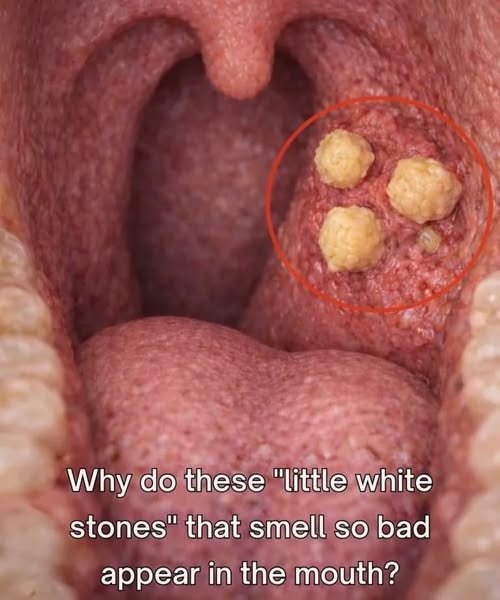
Those small white “stones” are called tonsil stones, medically known as tonsilloliths.
They’re common, harmless in most cases, and one of the most overlooked causes of bad breath.
What Are Tonsil Stones?
Tonsil stones form in the crypts (small pockets) of your tonsils. These pockets can trap:
-
Food particles
-
Dead cells
-
Mucus
-
Bacteria
Over time, this material hardens or calcifies, creating small white or yellowish stones. They can range in size from a grain of rice to a small pebble.
Why Do Tonsil Stones Cause Bad Breath?
The bacteria trapped in tonsil stones produce sulfur compounds, the same chemicals responsible for strong odors. This results in persistent bad breath that often doesn’t improve with brushing, flossing, or mouthwash.
Other symptoms may include:
-
A bad taste in the mouth
-
Sore or irritated throat
-
Feeling like something is stuck in the throat
-
Ear pain (referred pain from the throat)
What Causes Tonsil Stones?
Tonsil stones are more likely if you have:
-
Large or deeply creased tonsils
-
Chronic tonsillitis or frequent throat infections
-
Post-nasal drip
-
Poor oral hygiene
-
Dry mouth
Are Tonsil Stones Dangerous?
In most cases, no. Tonsil stones are not dangerous and do not lead to serious health problems. However, large or recurring stones can cause discomfort, inflammation, or repeated infections.
How to Get Rid of Tonsil Stones
Common ways to remove or reduce them include:
-
Gargling with warm salt water
-
Using a water flosser on a low setting
-
Practicing thorough oral hygiene (including the tongue)
-
Staying well hydrated
Avoid sharp objects, as they can injure the tonsils and cause infection.
When to See a Doctor
You should consult a healthcare professional if:
-
Tonsil stones are large, painful, or frequent
-
You have ongoing throat pain or swelling
-
Bad breath persists despite good oral care
In severe or chronic cases, treatment options may include antibiotics, laser cryptolysis, or tonsil removal.
Final Takeaway
Those small white stones in your throat are tonsil stones, and they’re a common cause of stubborn bad breath. While usually harmless, proper oral hygiene and medical guidance can help manage or prevent them.
If you want, I can turn this into a full article with headings, SEO-optimized blog post, or short health explainer for social media.