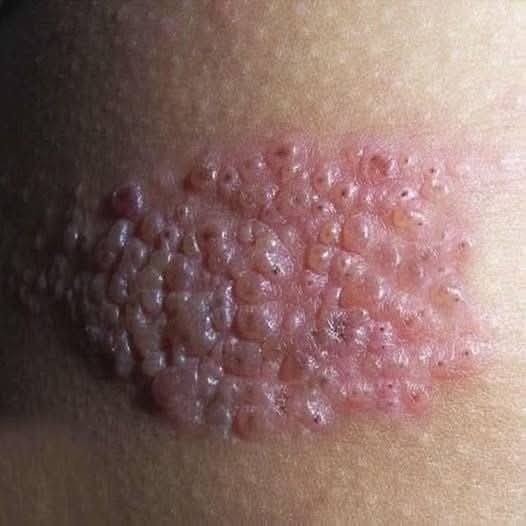
Shingles (Herpes Zoster): What It Really Is
Herpes zoster — commonly called shingles — is not caused by mucus, cold weather, or “toxins.” It happens when the same virus that causes Varicella reactivates later in life.
After you recover from chickenpox, the virus stays dormant in your nerve tissue. Years later, it can reactivate and travel along a nerve to the skin, causing a painful rash.
What Triggers Shingles?
Shingles is most often triggered by:
- Weakened immune system
- Aging (risk increases after age 50)
- Severe stress
- Illness
- Certain medications that suppress immunity
It is not caused by mucus buildup or poor hygiene.
Common Symptoms
- Burning, tingling, or sharp pain on one side of the body
- A red rash that develops into fluid-filled blisters
- Sensitivity to touch
- Fever
- Fatigue
- Headache
The rash usually appears in a band or stripe on one side of the torso, face, or neck.
Why It’s Painful
The virus affects nerves, which is why the pain can be intense. Some people develop a complication called postherpetic neuralgia — long-lasting nerve pain after the rash heals.
Is Shingles Contagious?
You cannot “catch” shingles from someone. However, someone who has never had chickenpox can catch chickenpox from contact with shingles blisters.
Treatment
Early treatment (within 72 hours of rash appearance) with antiviral medication can:
- Shorten the duration
- Reduce severity
- Lower risk of complications
Pain relief may also be prescribed.
Prevention
There is an effective vaccine called Shingrix that significantly reduces the risk of shingles and its complications. It is recommended for most adults over 50 and some younger adults with weakened immunity.
When to Seek Medical Care
Get medical attention immediately if:
- The rash is near the eye
- Pain is severe
- You have a weakened immune system
- Symptoms are worsening
If you’d like, I can also explain how to recognize shingles early or how it differs from other rashes.