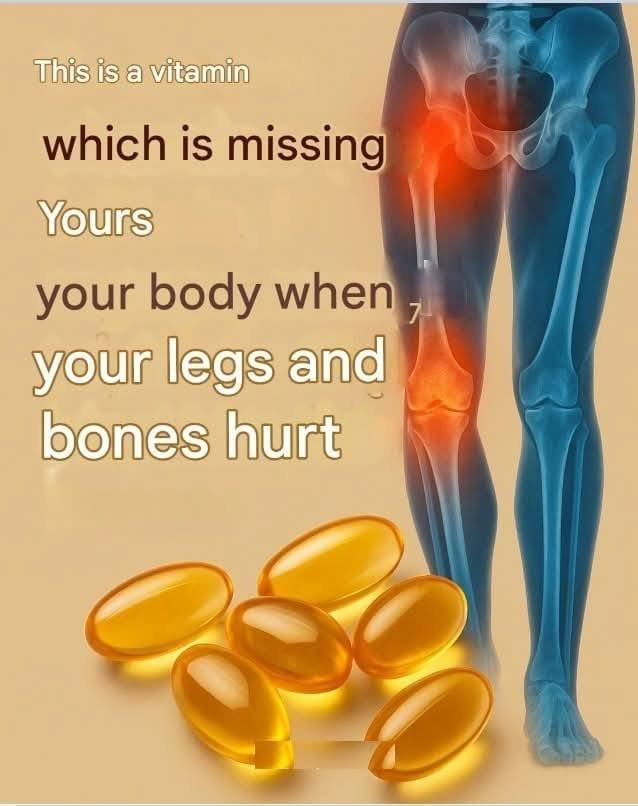
This Is the Vitamin Your Body May Be Missing When Your Legs and Bones Hurt
Aching legs. Sore bones. Unexplained muscle pain.
If these symptoms sound familiar—and especially if they linger—your body may be signaling a nutrient deficiency, not just everyday fatigue or aging.One vitamin stands out as a common and often overlooked factor in bone and leg pain: vitamin D.
Why Vitamin D Matters So Much
Vitamin D plays a crucial role in:
-
Calcium absorption
-
Bone strength and density
-
Muscle function
-
Nerve signaling
Without enough vitamin D, your body struggles to absorb calcium properly—even if your diet includes plenty of it. Over time, this can lead to bone discomfort, muscle weakness, and persistent aches, particularly in the legs and lower back.
Common Symptoms of Vitamin D Deficiency
Low vitamin D levels don’t always cause obvious symptoms at first. When they do, they often include:
-
Dull, aching bone pain
-
Pain or heaviness in the legs
-
Muscle weakness or cramps
-
Frequent fatigue
-
Lower back pain
-
Increased risk of fractures
-
Slow recovery after physical activity
In adults, prolonged deficiency can contribute to osteomalacia, a softening of the bones that causes pain and weakness.
Why Leg Pain Is So Common
The legs support the body’s weight and rely heavily on strong bones and muscles. When vitamin D levels are low:
-
Muscles fatigue more easily
-
Bones become more sensitive
-
Physical activity may feel harder than usual
This is why leg pain is often one of the earliest complaints.
Who Is Most at Risk?
Vitamin D deficiency is surprisingly common, especially among people who:
-
Spend little time in the sun
-
Live in colder or less sunny climates
-
Are over age 50
-
Have darker skin (which produces less vitamin D from sunlight)
-
Have digestive conditions that affect absorption
-
Wear sunscreen or cover most of their skin regularly
How Your Body Gets Vitamin D
1. Sunlight
Your skin produces vitamin D when exposed to sunlight. Even short daily exposure can help—but many people don’t get enough.
2. Food Sources
Vitamin D is found naturally in only a few foods, including:
-
Fatty fish (salmon, sardines, mackerel)
-
Egg yolks
-
Liver
-
Fortified milk, yogurt, and cereals
3. Supplements
For some people, diet and sunlight aren’t enough. Supplements may be recommended—but dosage should be guided by a healthcare provider.
When to Get Checked
If you experience ongoing leg or bone pain—especially alongside fatigue or muscle weakness—it’s reasonable to ask a healthcare professional about checking your vitamin D levels with a simple blood test.
Early detection can:
-
Relieve symptoms
-
Protect bone health
-
Reduce fracture risk
-
Improve muscle strength and balance
Important Reminder
Leg and bone pain can have many causes, including arthritis, nerve issues, or other nutrient deficiencies. Vitamin D deficiency is common—but it’s not the only explanation.
Never self-diagnose or take high-dose supplements without guidance.
The Takeaway
When your legs and bones ache without a clear reason, your body may be asking for support—sometimes in the form of vitamin D. Paying attention to these subtle signals and addressing deficiencies early can make a meaningful difference in comfort, mobility, and long-term bone health.
Sometimes, the smallest nutrients play the biggest roles.
If you’d like, I can:
-
Rewrite this for SEO
-
Make it shorter and more viral
-
Adapt it for older adults
-
Add a nutrition + sunlight action plan
Just tell me what you want next.