Here’s a responsible, evidence-based version of that message—clear, accurate, and not fear-driven.
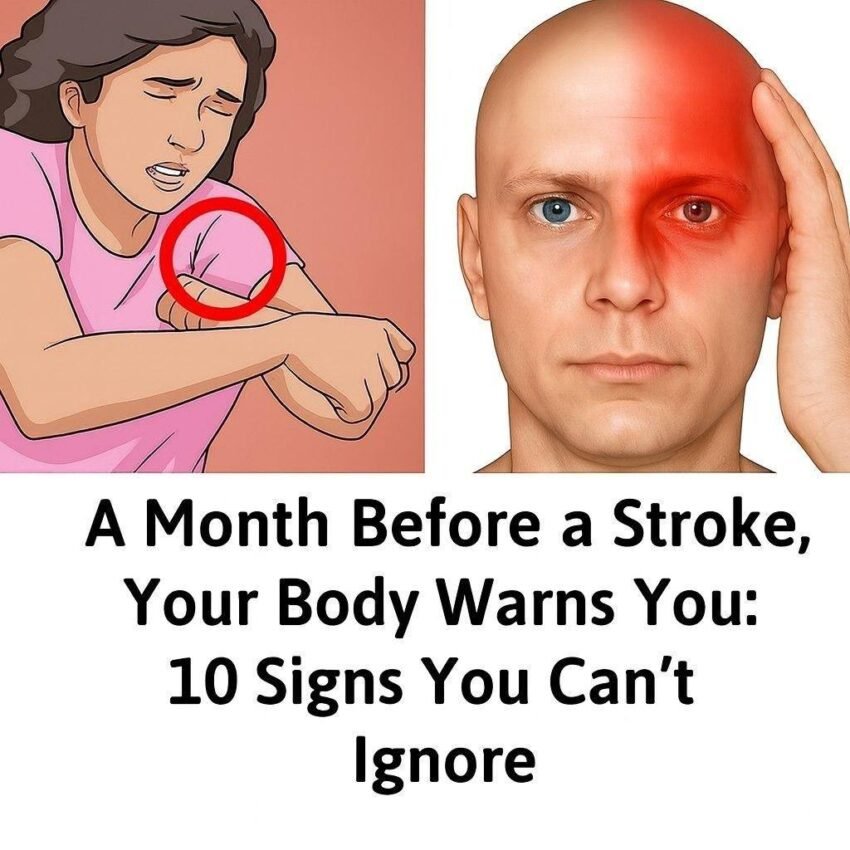
A Month Before a Stroke: 10 Warning Signs You Should Not Ignore
Strokes rarely happen “out of the blue.” In many cases, the body gives early warning signals weeks or even months beforehand—especially in people with risk factors. These signs are often subtle and easy to dismiss.
⚠️ Important: Not everyone will experience these signs, and having one does not mean a stroke is inevitable. But repeated or worsening symptoms should always be checked by a doctor.
10 Possible Early Warning Signs
1. Sudden weakness or numbness (even if brief)
- Especially on one side of the body
- Face, arm, or leg
- May come and go (a red flag)
2. Temporary vision problems
- Blurred vision
- Loss of vision in one eye
- Double vision
These can signal reduced blood flow to the brain.
3. Difficulty speaking or understanding words
- Slurred speech
- Trouble finding words
- Brief confusion
Even short episodes are significant.
4. Frequent or unusual headaches
- Especially sudden, severe, or different from usual headaches
- Can occur without nausea or migraine features
5. Dizziness or loss of balance
- Trouble walking
- Feeling unsteady or lightheaded
- Sudden coordination problems
6. Unexplained fatigue
- Persistent exhaustion not relieved by rest
- Especially when combined with other symptoms
7. Numbness or tingling sensations
- Face, lips, hands, or feet
- Often mistaken for anxiety or posture-related issues
8. Sudden changes in thinking or memory
- Confusion
- Trouble concentrating
- Personality or behavior changes
9. Chest discomfort or shortness of breath
- May reflect heart issues that raise stroke risk (e.g., atrial fibrillation)
10. Repeated mini-strokes (TIAs)
- Symptoms mimic a stroke but resolve within minutes or hours
- Strongest predictor of a future major stroke
🚨 A TIA is a medical emergency—even if symptoms disappear.
Who Is at Higher Risk?
- High blood pressure
- Diabetes
- Smoking
- High cholesterol
- Obesity
- Heart disease or atrial fibrillation
- Family history of stroke
- Age over 55 (but strokes can happen at any age)
When to Act Immediately: FAST Rule
Call emergency services right away if you notice:
- Face drooping
- Arm weakness
- Speech difficulty
- Time to call for help
⏱️ Every minute matters.
Key Takeaway
A stroke is often preventable when early warning signs are recognized and treated. Listening to your body—and acting early—can save your life or prevent permanent disability.
If you want, I can:
- Turn this into a health awareness poster or social media post
- Simplify it for patient education
- Adapt it into a short video script
- Focus on stroke prevention steps
Just tell me how you plan to use it.