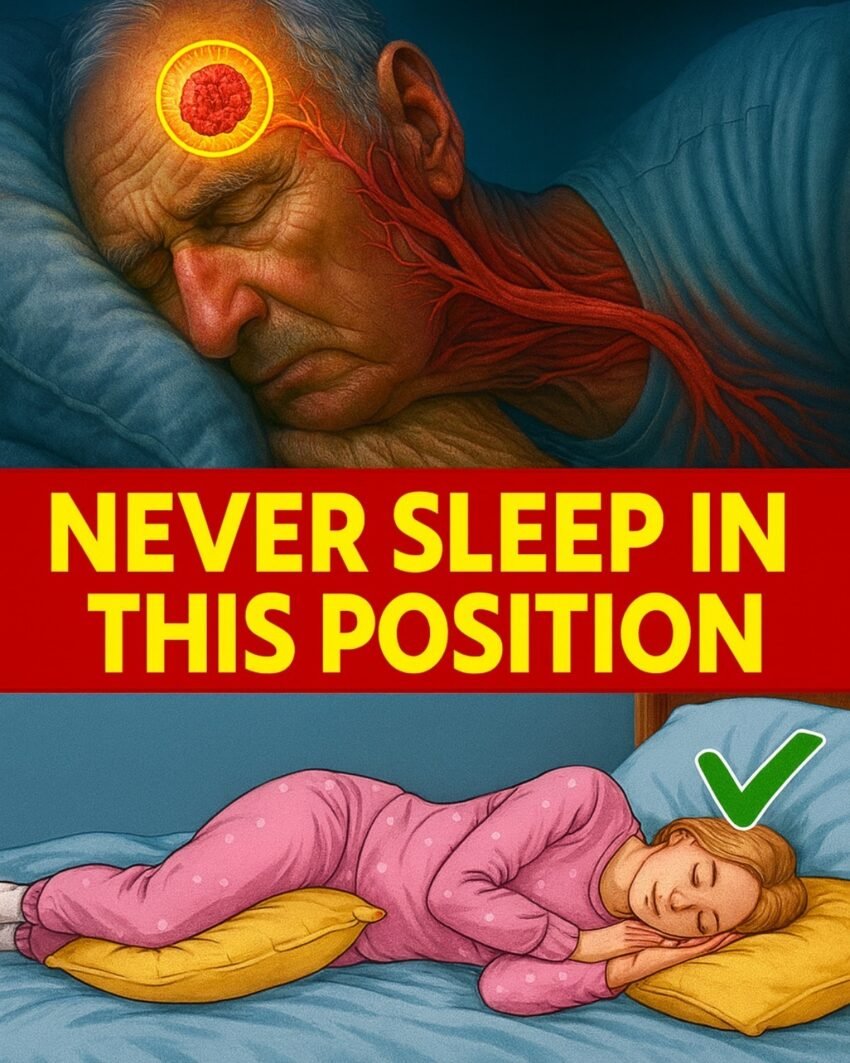
🧠 Does a Sleeping Position Really Raise Stroke Risk in Seniors?
There’s no strong, high-quality medical evidence showing that simply lying on one particular body position (e.g., back vs. side vs. stomach) directly causes stroke in seniors. Large clinical studies on stroke risk have focused more on sleep quality, duration, disorders like sleep apnea, and irregular sleep patterns — not a single sleeping posture raising risk on its own.
Here’s what the evidence actually suggests:
📊 What Sleep-Related Factors Are Linked to Stroke Risk
💤 1. Sleep Apnea (Breathing Blocks During Sleep)
-
People with obstructive sleep apnea (breathing repeatedly stops and starts) have a much higher risk of cardiovascular problems including high blood pressure and stroke.
-
Sleep apnea tends to be worse when sleeping on the back, because gravity makes airway collapse more likely.
⚠️ So it’s not the position itself that causes stroke — it’s that back-sleeping may worsen sleep apnea, and sleep apnea is a known stroke risk factor.
⏰ 2. Inconsistent or Poor Sleep Patterns
-
Irregular bedtimes, fragmented sleep, or poor quality sleep have been linked with a higher risk of stroke in older adults.
🕐 3. Too Little or Too Much Sleep
-
Both sleeping too short and too long have been moderately associated with increased stroke risk in older populations.
🧠 4. Overall Sleep Quality
-
Trouble falling asleep, frequent waking, or non-restful sleep are independently linked with higher stroke risk.
🛏️ What About the “Sleeping Position” Itself?
🔹 General* sleep position by itself (back, side, or stomach) has not been proven to directly cause stroke.
🔹 Some research suggests side-lying might help with breathing and brain waste clearance, but this is still under study and not definitive.
🔹 What does matter more for stroke risk is whether a sleep position affects breathing and oxygen levels — for example, worsening sleep apnea when on the back.
🤔 Bottom Line for Seniors
Instead of worrying about one specific sleeping position:
✅ Focus on what really affects stroke risk:
-
Treat or screen for sleep apnea (especially if you snore or feel tired during the day) — this is a known risk factor.
-
Try to maintain regular sleep schedules.
-
Aim for good sleep quality (7–9 hours per night with few awakenings).
-
Talk with a healthcare provider if you snore loudly, gasp or pause breathing, or feel exhausted despite enough hours of sleep.
If you want, I can break down which sleeping positions might help reduce sleep apnea symptoms and improve breathing & circulation — which can be important for older adults’ brain and heart health.