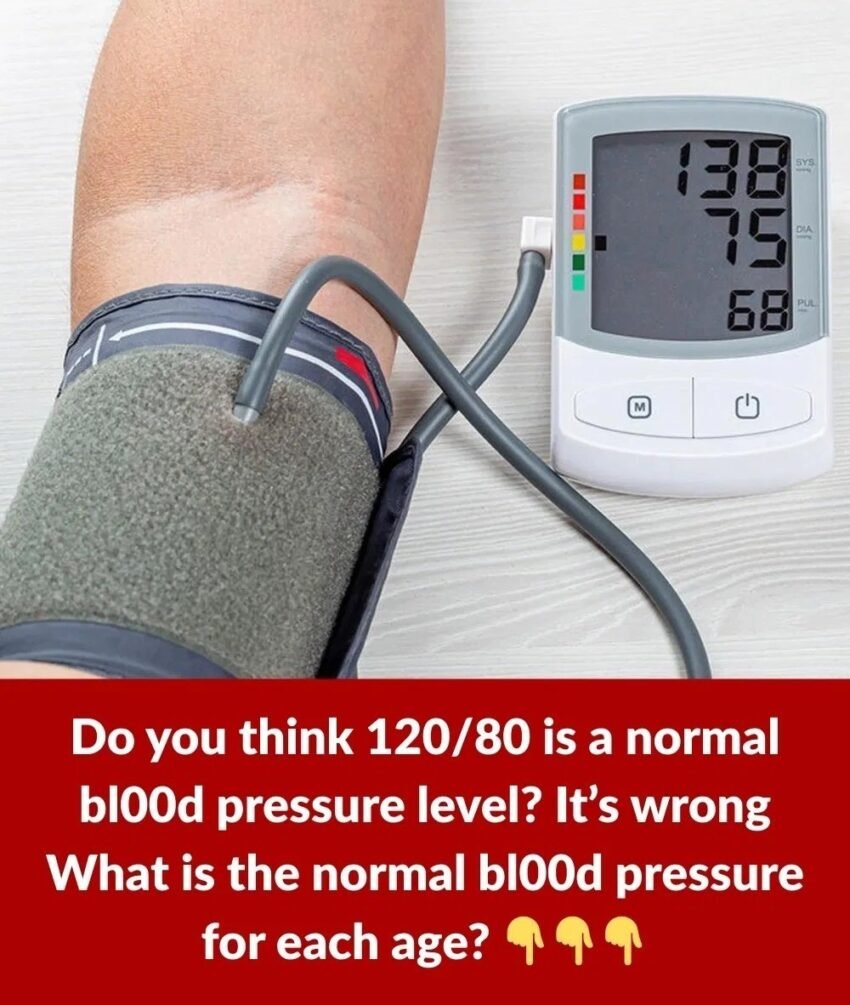
“Normal” blood pressure isn’t very different by age in adults — but interpretation does vary slightly for children and teens.
Here’s a clear breakdown:
🩺 Adults (18+)
According to the American Heart Association:
- Normal: below 120 / 80 mmHg
- Elevated: 120–129 / below 80
- High (Stage 1): 130–139 / 80–89
- High (Stage 2): 140+ / 90+
👉 This guideline applies to most adults, whether they’re 25 or 75.
While blood pressure tends to rise slightly with age due to stiffer arteries, doctors still aim for under 120/80 when safely possible.
👶 Children & Teens (1–17 years)
For children, “normal” depends on:
- Age
- Sex
- Height
Instead of a single number, doctors use percentile charts.
As a very general reference:
- Young children: around 90–110 / 55–75
- Teens: closer to adult values (around 110–120 / 65–80)
A pediatrician compares readings to standardized growth-based charts.
👵 Older Adults (65+)
Many doctors aim for:
- Under 130 / 80, if tolerated well
However, treatment targets may be adjusted based on:
- Fall risk
- Frailty
- Other health conditions
⚠️ When to Seek Immediate Help
- 180 / 120 or higher → Possible hypertensive crisis (medical emergency)
If you’d like, tell me your age and recent reading, and I can help you interpret it.