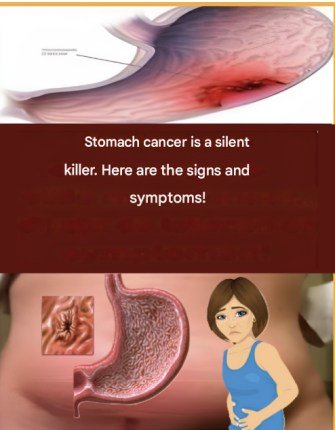
Stomach Cancer: The Silent Killer – Signs and Symptoms You Should Not Ignore
Stomach cancer, also known as gastric cancer, often develops slowly and may not cause noticeable symptoms in its early stages. Because early warning signs can be mild or mistaken for common digestive problems, it is sometimes referred to as a “silent killer.” Recognizing the symptoms early can improve the chances of successful treatment.
What Is Stomach Cancer?
Stomach cancer occurs when abnormal cells grow uncontrollably in the lining of the stomach. The most common type is adenocarcinoma, which begins in the mucus-producing cells of the stomach lining.
Risk factors may include:
- Infection with Helicobacter pylori (H. pylori)
- Smoking
- Diet high in smoked, salted, or processed foods
- Family history of gastric cancer
- Chronic gastritis
Early Signs and Symptoms
In the early stages, symptoms may be vague and easily overlooked:
1. Persistent Indigestion
Frequent heartburn, bloating, or mild stomach discomfort that does not improve with usual remedies.
2. Feeling Full Quickly
Becoming full after eating small amounts of food (early satiety).
3. Loss of Appetite
Reduced desire to eat, sometimes accompanied by mild nausea.
4. Mild Abdominal Pain
Discomfort or burning sensation in the upper abdomen.
Advanced Symptoms
As the disease progresses, symptoms may become more serious:
5. Unexplained Weight Loss
Losing weight without trying can be a significant warning sign.
6. Vomiting (Sometimes with Blood)
Vomiting blood or material that looks like coffee grounds requires immediate medical attention.
7. Black or Tarry Stools
This may indicate internal bleeding in the digestive tract.
8. Severe Fatigue
Ongoing tiredness caused by anemia from chronic internal bleeding.
9. Difficulty Swallowing
Especially if the tumor is located near the upper part of the stomach.
When to See a Doctor
Seek medical evaluation if:
- Symptoms last more than two weeks
- You experience unexplained weight loss
- There is blood in vomit or stool
- Pain becomes persistent or severe
Early detection greatly improves outcomes. Doctors may use endoscopy, imaging tests, and biopsies to diagnose the condition.
Final Thoughts
Stomach cancer can be difficult to detect early because its symptoms resemble common digestive problems. Paying attention to persistent or unusual changes in your body is essential. If something feels wrong, do not ignore it—consult a healthcare professional for proper evaluation and peace of mind.
If you would like, I can also provide information on prevention strategies and lifestyle changes that may reduce the risk of stomach cancer.