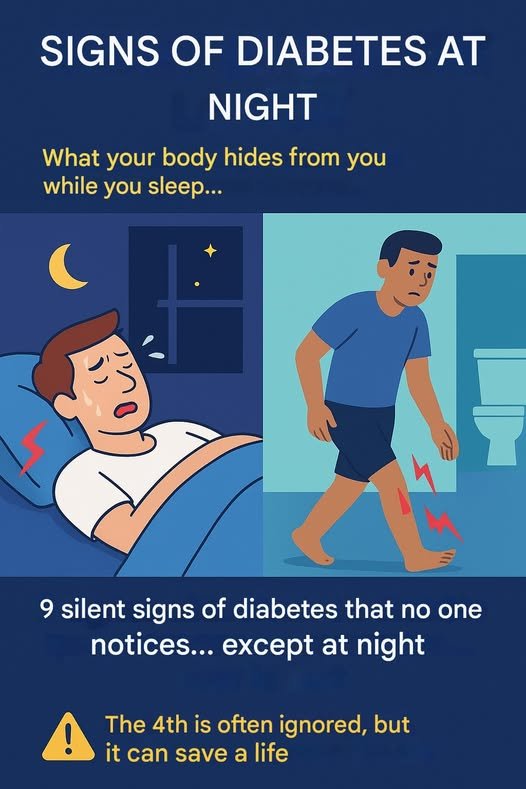
9 Signs of Diabetes That Appear at Night: What You Need to Know
Introduction
Diabetes can cause symptoms that become more noticeable at night due to changes in hormone levels, food intake, or medication timing. Recognizing these nighttime signs can help you identify high blood sugar or diabetes early and prevent complications.
1. Frequent Nighttime Urination
Excess glucose in the blood forces the kidneys to remove more sugar through urine, leading to increased trips to the bathroom during the night.
2. Excessive Thirst
High blood sugar draws water from the body, causing persistent thirst, which may worsen at night when fluid intake decreases.
3. Dry Mouth
Reduced saliva production combined with dehydration from high blood sugar can lead to a dry, uncomfortable mouth while sleeping.
4. Fatigue or Trouble Sleeping
Hyperglycemia can disrupt sleep patterns, making it difficult to fall asleep or stay asleep. People may wake up feeling unrefreshed despite a full night’s rest.
5. Night Sweats
Fluctuating blood sugar levels can trigger excessive sweating during the night. This may also be accompanied by restlessness or discomfort.
6. Tingling or Numbness
High blood sugar can damage nerves, causing tingling, numbness, or burning sensations in the hands or feet, often noticeable when lying down.
7. Headaches
Dehydration and changes in blood sugar levels can lead to headaches that appear or worsen in the evening or at night.
8. Blurred Vision
Blood sugar fluctuations can temporarily affect the shape of the lens in the eyes, causing blurred vision that may be more noticeable at night.
9. Restlessness or Irritability
High blood sugar can affect mood, leading to nighttime restlessness, irritability, or difficulty relaxing before sleep.
When to Seek Medical Advice
If you frequently experience these symptoms, it is important to monitor your blood sugar and consult a healthcare professional. Untreated high blood sugar can lead to serious complications such as nerve damage, kidney problems, and cardiovascular disease.
Conclusion
Nighttime signs of diabetes are often overlooked but can provide early clues about blood sugar control. Paying attention to frequent urination, thirst, sleep disturbances, or tingling sensations can help in early detection and better management of diabetes.
This article is for informational purposes only and does not replace professional medical advice.