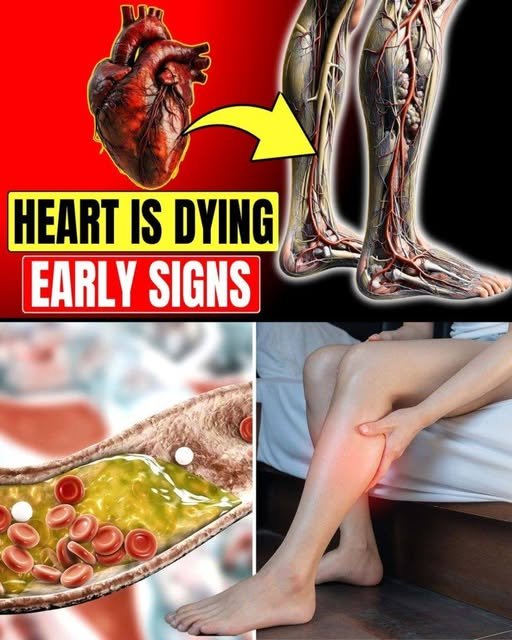
10 Warning Signs of Blocked Heart Arteries in the Legs and Feet (Don’t Ignore These Signals)
Introduction
Blocked arteries in the legs and feet are often linked to peripheral artery disease (PAD), a condition caused by plaque buildup that restricts blood flow. This problem is closely associated with heart disease and increases the risk of heart attack and stroke. Many early symptoms appear in the lower extremities and are frequently overlooked or mistaken for normal aging or fatigue.
1. Leg Pain While Walking
Pain, cramping, or aching in the legs during walking or physical activity that improves with rest is one of the most common signs of reduced blood flow.
2. Numbness or Weakness in the Legs
Poor circulation can cause numbness, tingling, or weakness in the legs and feet, making movement uncomfortable or unstable.
3. Cold Feet or Lower Legs
If one or both feet feel consistently colder than the rest of the body, it may indicate restricted blood supply.
4. Slow-Healing Wounds
Cuts, sores, or blisters on the feet or legs that heal slowly or not at all may be a sign of poor circulation caused by blocked arteries.
5. Changes in Skin Color
Pale, bluish, or darkened skin on the legs or feet can signal reduced oxygen delivery due to narrowed arteries.
6. Shiny Skin or Hair Loss
Loss of hair on the legs or shiny, thin skin may indicate chronic poor blood flow.
7. Weak or Absent Pulse in Feet
A weak or undetectable pulse in the feet or ankles can be a sign of arterial blockage.
8. Pain at Rest
In advanced cases, leg or foot pain may occur even when resting, especially at night when lying down.
9. Thickened or Brittle Toenails
Poor circulation can affect nail growth, leading to thick, brittle, or slow-growing toenails.
10. Erectile Dysfunction
In men, erectile dysfunction can be an early warning sign of widespread arterial disease, including blockages affecting the legs.
When to See a Doctor
Seek medical attention if you experience persistent leg pain, non-healing wounds, or noticeable changes in skin temperature or color. Early diagnosis and treatment can prevent serious complications such as infections, ulcers, or limb damage.
Conclusion
Blocked arteries in the legs and feet often develop silently but send warning signals through changes in circulation, pain, and skin health. Recognizing these signs early can help protect not only limb health but also overall cardiovascular well-being.
This article is for informational purposes only and does not replace professional medical advice.