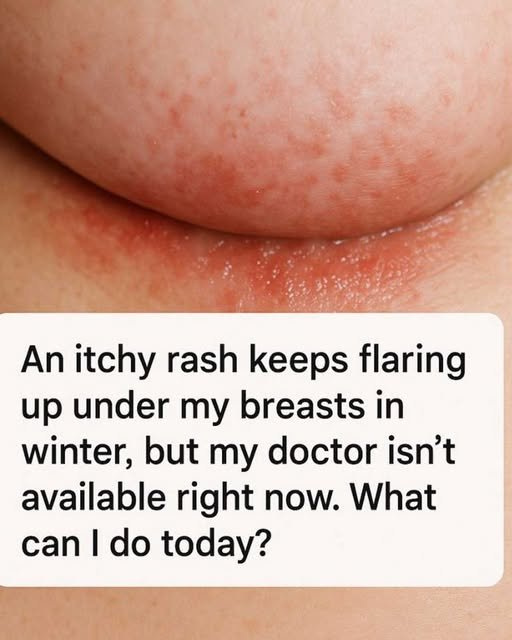
How to Manage an Itchy Rash Under the Breasts at Home
An itchy rash under the breasts is common, especially in winter, when dry skin, sweat, and friction combine. While this type of rash is often mild, it can be persistent and uncomfortable. If your doctor is unavailable, the following steps can help reduce irritation and promote healing until you’re able to get medical advice.
Common Causes
Rashes in this area are often caused by one or more of the following:
-
Moisture trapped in skin folds
-
Friction from bras or tight clothing
-
Yeast or fungal overgrowth (intertrigo)
-
Contact irritation from soaps, detergents, or fabrics
-
Eczema or dry winter skin
Immediate Care Steps
1. Clean Gently
-
Wash the area once daily with lukewarm water.
-
Use a mild, fragrance-free cleanser.
-
Avoid scrubbing, which can worsen irritation.
2. Dry Thoroughly
-
Pat the area dry with a clean towel.
-
Use a cool or low-warm hair dryer for 30–60 seconds to remove remaining moisture.
-
Make sure the skin is completely dry before dressing.
Reducing Moisture and Friction
Clothing Choices
-
Wear breathable, loose-fitting cotton bras or camisoles.
-
Avoid underwire or tight elastic if it rubs the area.
-
At home, consider going without a bra if comfortable.
Moisture Control
-
Place a clean cotton cloth or gauze under the breast fold to absorb sweat.
-
Change it if it becomes damp.
Soothing the Itch and Protecting Skin
Barrier Protection
-
Apply a thin layer of zinc oxide (commonly used for diaper rash) to protect skin from moisture and friction.
-
Use sparingly and only on intact skin.
Cooling Relief
-
Apply a cool compress for 5–10 minutes to help reduce itching and inflammation.
Over-the-Counter Treatment Options
Choose one approach based on symptoms:
If the rash is red, itchy, and worsens with moisture
-
Use an antifungal cream such as clotrimazole or miconazole.
-
Apply twice daily for up to 2 weeks.
If the rash is inflamed and very itchy but not oozing or cracked
-
Use hydrocortisone 1% cream once daily.
-
Limit use to 5–7 days.
Do not combine antifungal and steroid creams unless advised by a healthcare professional.
What to Avoid
-
Fragranced lotions, powders, or soaps
-
Talcum powder
-
Thick ointments that trap moisture
-
Scratching, which can break the skin and lead to infection
When to Seek Medical Care
Contact a healthcare provider sooner if you notice:
-
No improvement after 3–5 days of home treatment
-
Cracked skin, oozing, or a strong odor
-
Spreading redness, swelling, or pain
-
Fever or signs of infection
Prevention Tips for Winter
-
Keep the area dry year-round, especially after bathing.
-
Use moisture-wicking fabrics when layering clothing.
-
Maintain good skin hydration elsewhere, but avoid heavy creams in skin folds.
If you want, you can describe the rash’s appearance (for example: bright red, scaly, shiny, or with small bumps), and I can help you better decide which treatment option is most appropriate while you wait to see your doctor.
t.