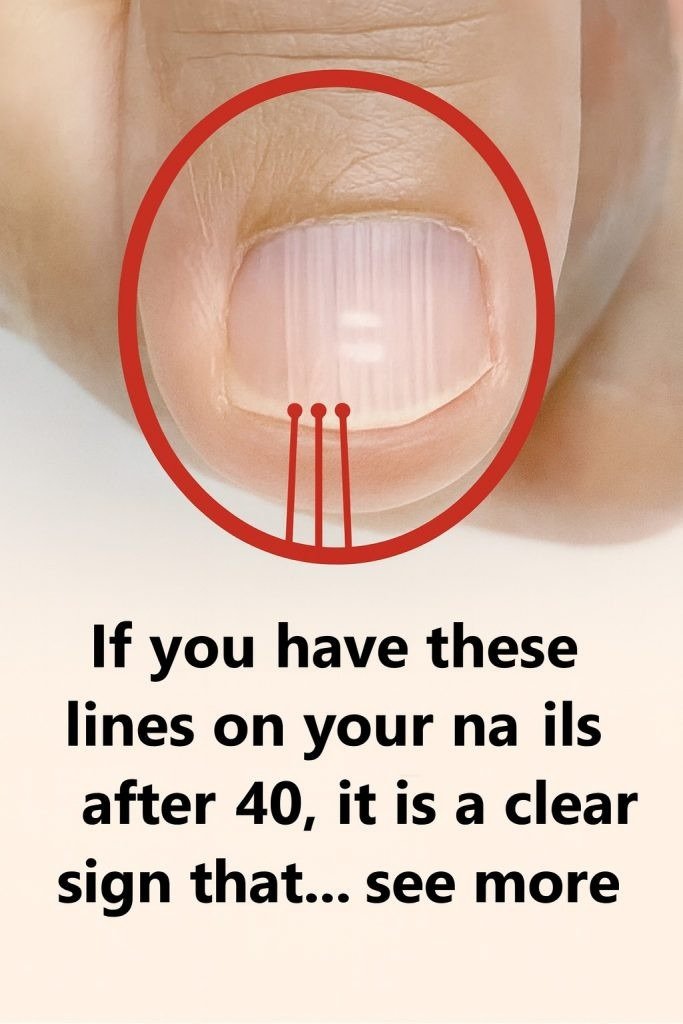
Here’s the accurate, calm explanation of nail lines—especially after 40.
Lines on Nails After 40: What They Usually Mean
Vertical lines (running from cuticle to tip)
Most common and usually harmless
- Very common with aging
- Caused by slower cell turnover and mild dehydration
- Can be more noticeable after 40
Usually associated with:
- Normal aging
- Dryness
- Minor nutrient gaps (iron, B vitamins)
Not a warning sign on their own
Horizontal lines (across the nail)
More important to pay attention to
These are called Beau’s lines.
They can appear after:
- Severe illness or high fever
- Major stress or surgery
- Uncontrolled diabetes
- Heart or circulation problems
- Chemotherapy or serious infections
They show up weeks or months after the event that stressed the body.
Deep grooves, splitting, or ridging with color changes
These may signal an underlying issue if they appear suddenly or worsen:
- Iron deficiency (pale or spoon-shaped nails)
- Thyroid disorders (brittle, thin nails)
- Psoriasis (pitting, ridges, discoloration)
- Circulatory problems
Nail color + lines matter more than lines alone
Red flags include:
- Dark streaks that don’t move as the nail grows
- Yellow, thickened nails
- White lines with fatigue or weakness
- Pain, swelling, or nail separation
These should be checked by a healthcare professional.
What Helps Nail Health
- Adequate protein intake
- Iron, zinc, and B vitamins if deficient
- Staying hydrated
- Gentle nail care (avoid aggressive buffing)
Bottom line
Most nail lines after 40 are a normal sign of aging, not a warning.
Concern is warranted only when lines are horizontal, sudden, deep, or paired with other symptoms.
If you want, tell me:
- Vertical or horizontal lines?
- Any color change?
- New or long-standing?
I can help you figure out whether it’s normal aging or something worth checking.