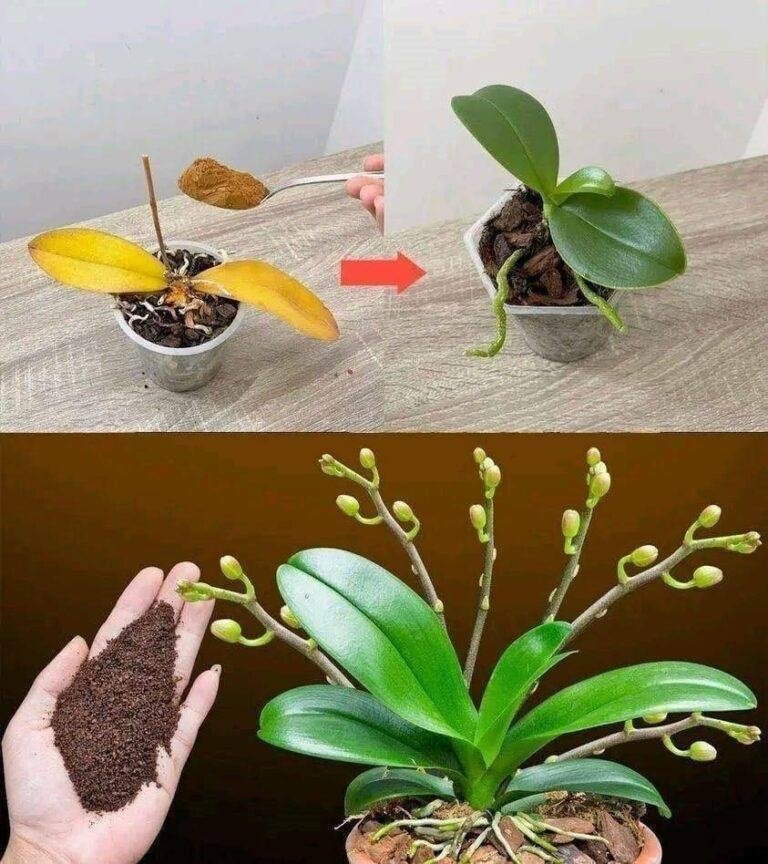
That claim is another gardening “miracle hack” style exaggeration. There is no one teaspoon of anything that will suddenly make an orchid burst into blooms overnight.
A Orchid can rebloom beautifully—but only when its basic needs are met consistently.
🌸 What actually makes orchids bloom
☀️ 1. Light (most important factor)
- Bright, indirect light is key
- Too little light → lots of leaves, no flowers
💧 2. Proper watering
- Water thoroughly, then let roots partially dry
- Overwatering is a top reason orchids stop flowering
🌿 3. Fertilizer (this is where “teaspoon” myths come from)
Orchids do benefit from feeding, but:
- Use diluted orchid fertilizer (often “weak weekly” formula)
- Not a random kitchen ingredient or spoon of something unmeasured
🌡️ 4. Temperature difference
- A small drop between day and night temperature can trigger blooming
- Many orchids respond to a 5–10°C difference
🪴 5. Rest period after flowering
- After blooms fall, the plant needs recovery time
- This is normal—not failure
🚫 Why “1 teaspoon = instant flowers” is misleading
- Orchids don’t respond to single-dose “boosts”
- Excess fertilizer can actually damage roots
- Blooming is a long biological cycle, not a quick reaction
⚖️ Bottom line
Orchids bloom when light, watering, nutrition, and temperature are balanced over time—not from a magic teaspoon of anything.
If you want, tell me what type of orchid you have (Phalaenopsis, Dendrobium, etc.), and I can give you a simple step-by-step bloom-recovery plan tailored to it.