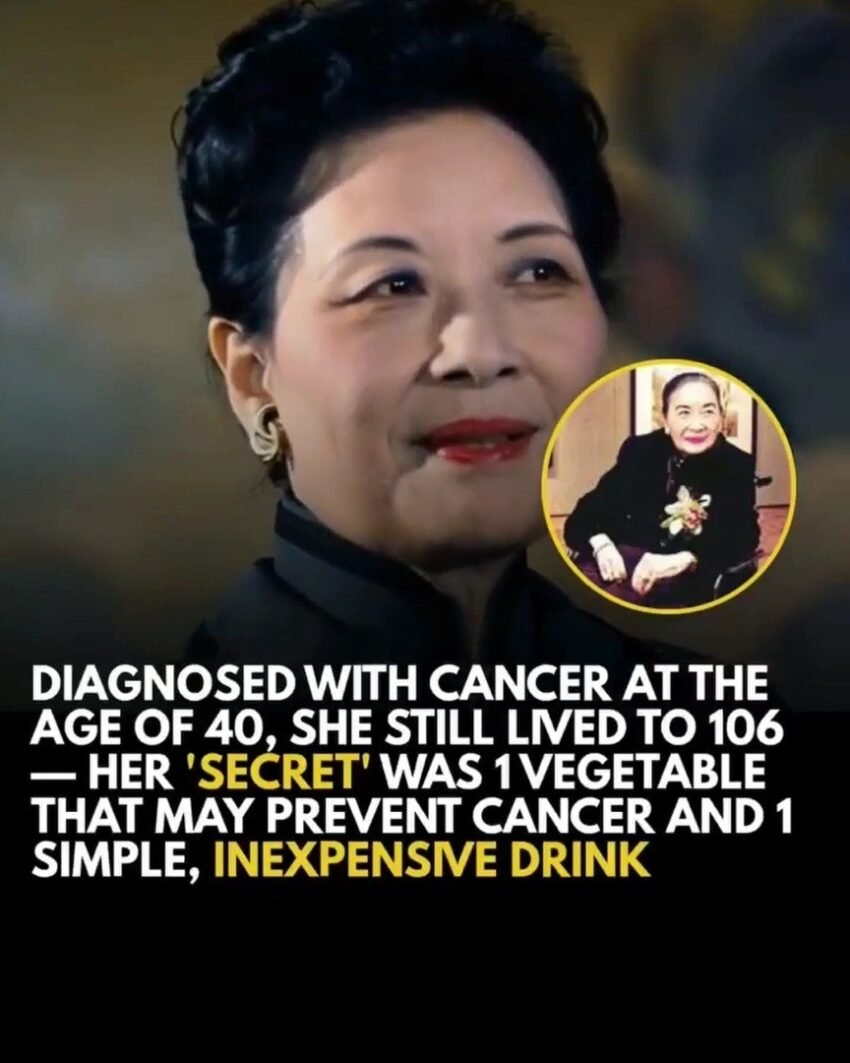
That headline is designed to sound dramatic, but it’s not medically reliable.
A story like “she lived to 106 because of 1 vegetable and 1 drink” is almost always an anecdote + marketing-style exaggeration, not science.
🧠 What medicine actually knows about cancer
Cancer is influenced by many factors:
- Genetics
- Age
- Smoking and alcohol
- Diet and body weight
- Physical activity
- Environmental exposures
- Chance (random mutations over time)
There is no single food or drink that prevents or cures cancer.
🥦 What about the “one vegetable” claim?
Some vegetables do support lower cancer risk as part of a healthy diet, especially:
- Broccoli, cabbage, kale (cruciferous vegetables)
- Tomatoes (lycopene)
- Leafy greens
They contain compounds that may help reduce inflammation or support cell repair—but:
- They do not prevent cancer on their own
- Benefits come from long-term diet patterns, not one food
🥤 What about the “simple inexpensive drink”?
Commonly promoted “miracle drinks” in these stories include:
- Green tea
- Lemon water
- Herbal infusions
Some, like green tea, contain antioxidants (e.g., catechins), and may be linked to modestly reduced risk in studies—but:
- Effects are small
- Not protective enough to prevent cancer alone
- Not a treatment
⚖️ Why people believe these stories
This type of claim usually comes from:
- One long-lived person + one habit = oversimplified cause
- Survivorship bias (we don’t hear from others who did the same but didn’t live long)
- Media exaggeration for clicks
🧬 What actually reduces cancer risk (evidence-based)
Lifestyle factors with real evidence:
- Not smoking
- Maintaining healthy weight
- Regular exercise
- Balanced diet (fruits, vegetables, whole grains)
- Limiting alcohol
- Vaccines (like HPV and Hepatitis B for certain cancers)
🚫 Bottom line
There is no proven “secret vegetable” or drink that prevents cancer or explains extreme longevity. Healthy habits can reduce risk, but they don’t guarantee outcomes.
If you want, I can break down which foods actually have the strongest research behind cancer risk reduction (and which claims online are pure myth).