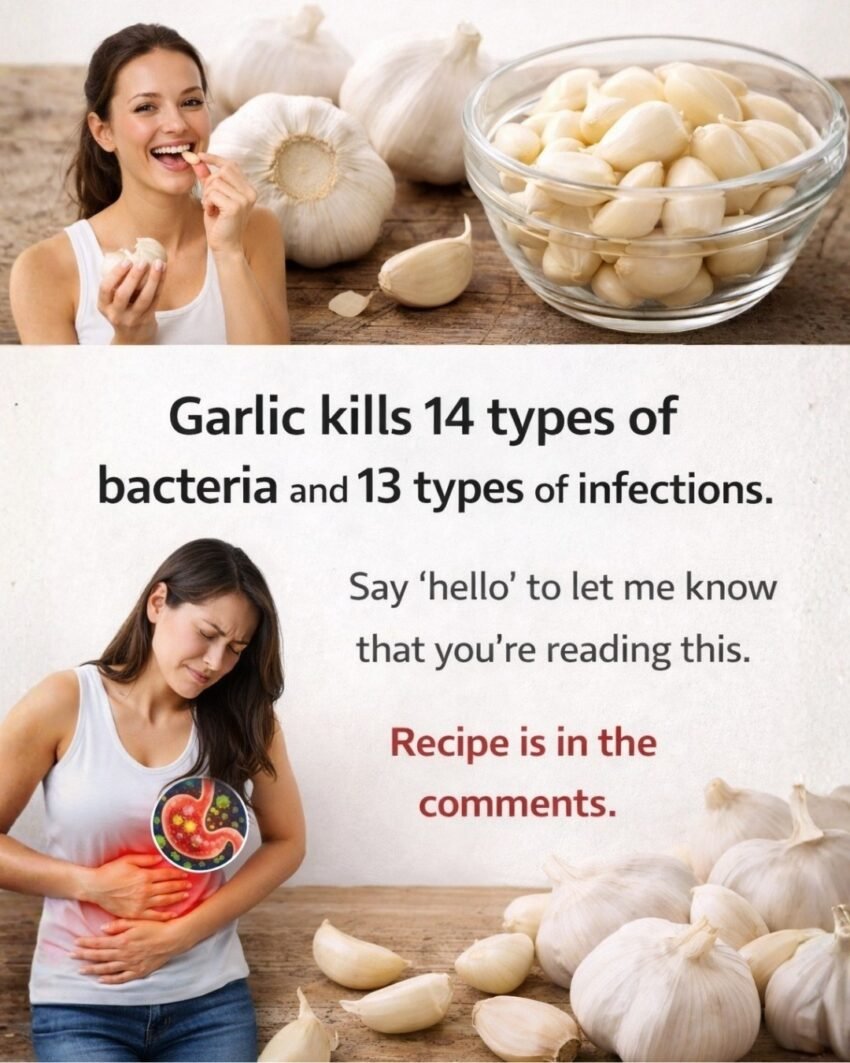
Garlic has a solid reputation for health benefits—but calling it a “natural antibiotic that destroys infection” is an overreach.
🧄 What garlic actually does
Garlic contains Allicin, which shows antibacterial and antifungal effects in lab studies. That’s why it’s often linked to fighting microbes.
🧪 The important reality check
- Lab (test-tube) effects ≠ real treatment in the human body
- The amount of allicin you’d need to treat a true infection is far higher than what you get from eating garlic
- Your body breaks it down quickly, so it doesn’t act like a targeted drug
💊 Why it’s not a replacement for antibiotics
Serious infections (like Pneumonia or Urinary Tract Infection) require proper antibiotics because:
- They reach effective concentrations in the bloodstream
- They’re tested for specific bacteria
- Delaying treatment can lead to complications
Garlic simply doesn’t meet those standards.
👍 Where garlic can help
- General immune support
- Mild antimicrobial effects as part of a healthy diet
- Possibly reducing risk of some infections over time
Think of it as supportive nutrition, not a cure.
⚠️ Risks of overdoing it
- Stomach irritation
- Bad breath/body odor
- Can interact with blood thinners (increased bleeding risk)
⚖️ Bottom line
Garlic is healthy and has antimicrobial properties—but it doesn’t “destroy infections” in the way real antibiotics do. Using it instead of proper treatment can delay recovery and make things worse.
If you’re dealing with a specific infection or symptom, tell me what’s going on—I can help you figure out whether home care is reasonable or if you should see a doctor.