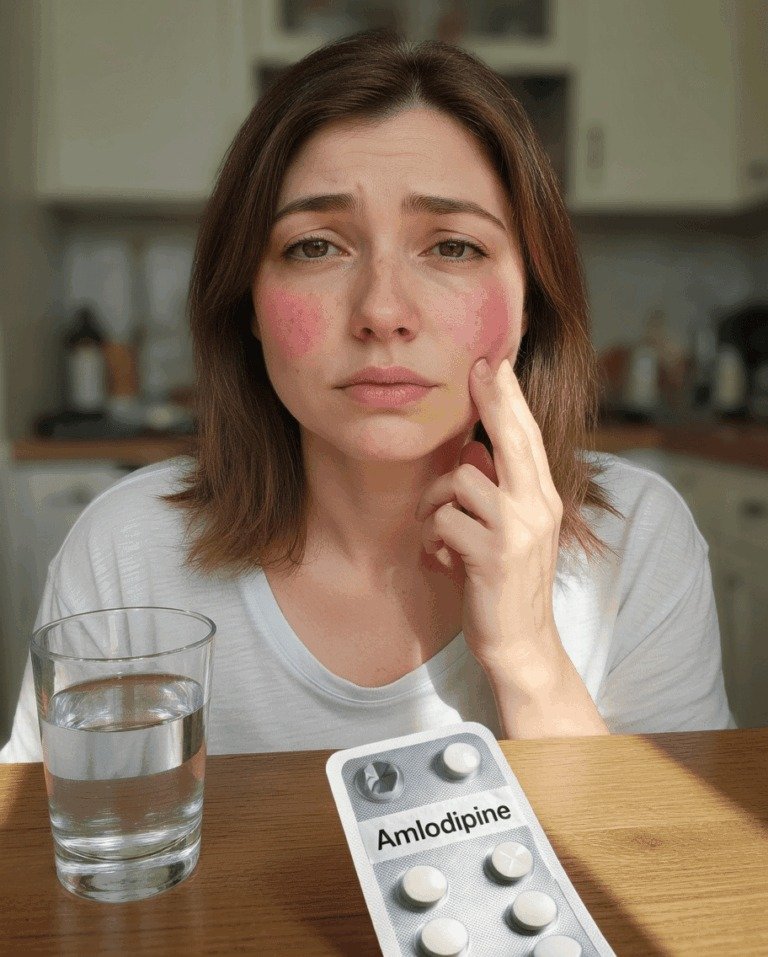
Amlodipine is widely used for high blood pressure and chest pain, and most people tolerate it well. That said, there are some side effects that catch people off guard—not because they’re secret, but because they’re less common or show up later.
⚠️ Common but Often Underestimated
These are well-known medically, but patients aren’t always warned how noticeable they can be:
- Swollen ankles/feet (edema)
Very common. It’s due to fluid leaking from small blood vessels—not necessarily heart or kidney failure. - Flushing or warmth in the face
Caused by blood vessel dilation. - Headaches
Especially when starting or increasing dose. - Fatigue or dizziness
From lowered blood pressure.
😮 Less-Discussed (But Real) Effects
- Gum overgrowth (gingival hyperplasia)
Gums may thicken or swell over time. Good dental hygiene helps reduce risk. - Palpitations or awareness of heartbeat
Some people feel their heart pounding or racing. - Mood changes or sleep disturbance
Rare, but reported—things like insomnia or anxiety. - Skin changes
Rash, itching, or increased sensitivity. - Digestive issues
Nausea or abdominal discomfort.
🚨 Rare but Important to Recognize
- Worsening chest pain (angina) when starting or increasing dose
- Very low blood pressure (lightheadedness, fainting)
- Allergic reactions (swelling of face/lips, trouble breathing)
These need prompt medical attention.
🤔 Why side effects vary so much
Amlodipine works by relaxing blood vessels. That same effect can:
- Improve blood flow (good)
- But also cause fluid leakage → swelling
- Or trigger reflex heart rate changes → palpitations
Your body’s response, dose, and other medications all matter.
💡 Practical tips
- Swelling? Elevate legs, reduce salt, and talk to your doctor—sometimes dose adjustment or adding another medication helps.
- Don’t stop suddenly without guidance—blood pressure can rebound.
- Report anything persistent or unusual, especially if it affects daily life.
⚖️ Bottom line
There aren’t really “hidden” dangers doctors are withholding—but some side effects are underemphasized because they don’t happen to everyone. The key is knowing what’s possible so you can respond early.
If you’re taking it and noticing something specific, tell me what’s going on—I can help you sort out whether it’s likely related or something else.