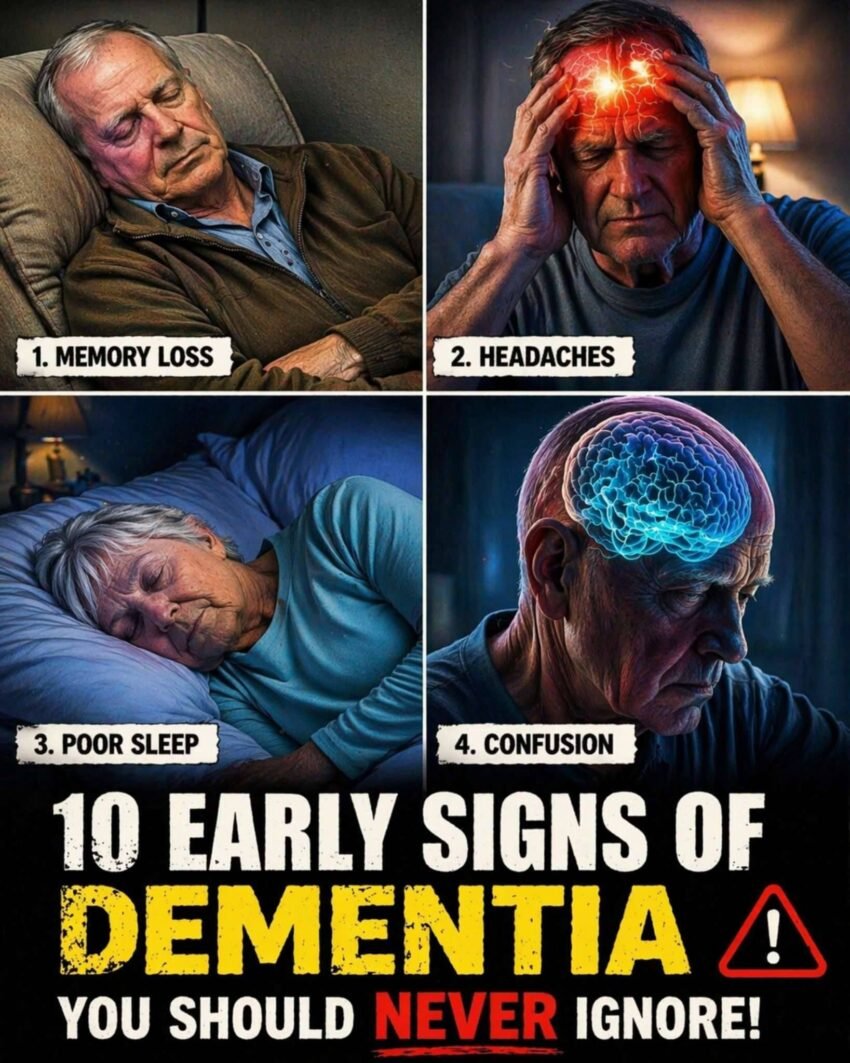
10 Early Dementia Signs Your Brain Is Warning You About
Dementia is a progressive condition that affects memory, thinking, and behavior. Detecting early warning signs can help you seek medical advice promptly, improve quality of life, and potentially slow progression.
1. Memory Loss That Disrupts Daily Life
- Forgetting recently learned information, important dates, or appointments.
- Asking the same questions repeatedly.
2. Difficulty Performing Familiar Tasks
- Struggling with routine tasks like cooking, driving, or managing finances.
- Forgetting the steps involved in tasks you once handled easily.
3. Trouble With Problem Solving or Planning
- Difficulty following instructions, keeping track of bills, or solving simple problems.
- Feeling overwhelmed by complex tasks.
4. Confusion With Time or Place
- Losing track of dates, seasons, or the passage of time.
- Getting lost in familiar neighborhoods or forgetting how you arrived somewhere.
5. Trouble Understanding Visual Images or Spatial Relationships
- Difficulty reading, judging distance, or recognizing colors and shapes.
- Problems with balance or navigating familiar spaces.
6. New Problems With Words in Speaking or Writing
- Struggling to find the right words during conversation.
- Replacing words with vague phrases or pausing frequently.
7. Misplacing Things and Losing the Ability to Retrace Steps
- Putting objects in unusual places.
- Accusing others of stealing or becoming frustrated when unable to find items.
8. Decreased or Poor Judgment
- Making unusual decisions with money, grooming, or personal care.
- Being more gullible or trusting than usual.
9. Withdrawal From Work or Social Activities
- Avoiding hobbies, social events, or work projects.
- Feeling overwhelmed by group settings or new activities.
10. Changes in Mood or Personality
- Becoming confused, suspicious, depressed, fearful, or anxious.
- Mood swings or loss of interest in things previously enjoyed.
When to Seek Help
If you or a loved one notice several of these signs, it is important to consult a healthcare professional. Early diagnosis can help:
- Access treatments that may slow progression.
- Plan for long-term care and lifestyle adjustments.
- Improve overall quality of life through cognitive support and therapy.
Conclusion
Early detection of dementia can make a significant difference. Paying attention to memory lapses, changes in behavior, or difficulty with daily tasks can help you take proactive steps to protect brain health.
I can also make a “7 Daily Habits to Support Brain Health and Reduce Dementia Risk” guide that complements early detection strategies.
Do you want me to make that guide?