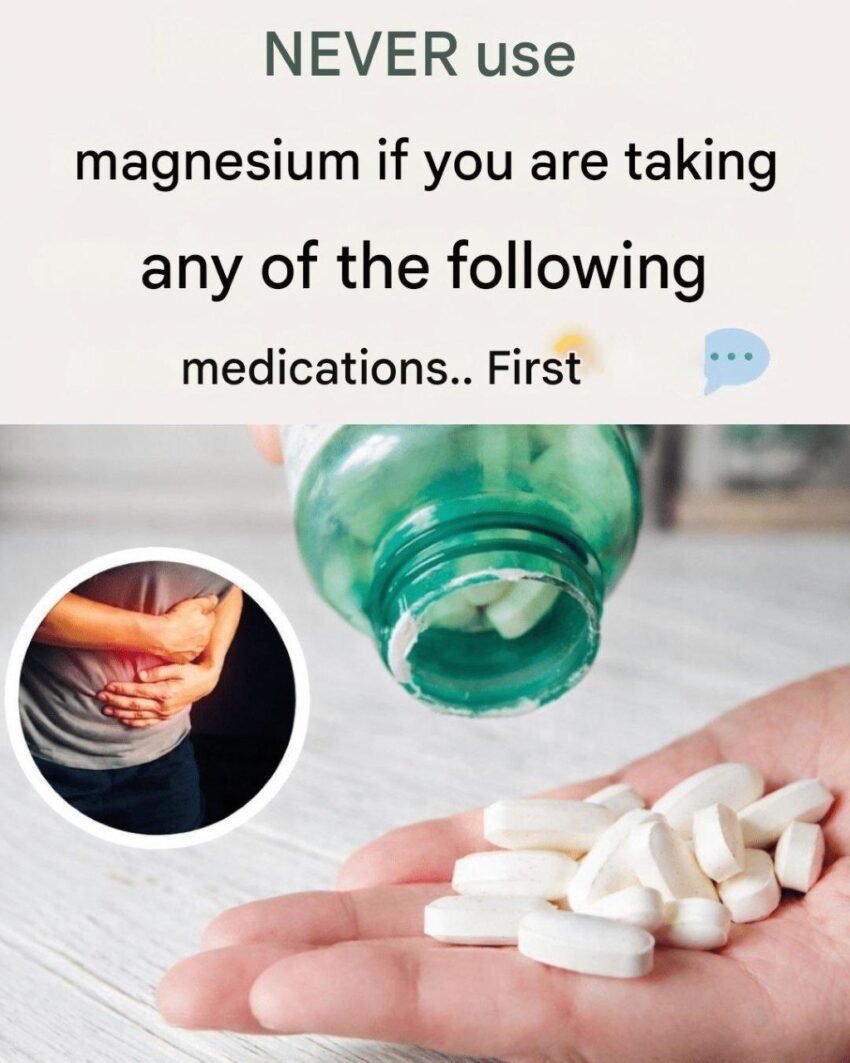
NEVER Use Magnesium If You Are Taking These Medications
Magnesium is an essential mineral that supports muscle function, nerve health, heart rhythm, and sleep. While beneficial for many, it can interact with certain medications, sometimes reducing their effectiveness or causing side effects.
Medications That Interact With Magnesium
1. Antibiotics (Tetracyclines and Fluoroquinolones)
- Examples: Doxycycline, Ciprofloxacin
- Interaction: Magnesium can bind to these antibiotics in the gut, reducing absorption and making the medication less effective.
- Tip: Take antibiotics at least 2–4 hours before or after magnesium.
2. Bisphosphonates (Osteoporosis Medications)
- Examples: Alendronate, Risedronate
- Interaction: Magnesium may reduce absorption of these drugs, lowering their effectiveness.
- Tip: Take magnesium supplements at least 2 hours apart from these medications.
3. Blood Pressure Medications (Calcium Channel Blockers)
- Examples: Amlodipine, Nifedipine
- Interaction: High doses of magnesium may enhance the blood pressure-lowering effect, potentially causing dizziness or fainting.
- Tip: Monitor your blood pressure closely if combining magnesium with these medications.
4. Diuretics (Water Pills)
- Examples: Furosemide, Hydrochlorothiazide, Spironolactone
- Interaction: Some diuretics increase magnesium loss, while others may increase magnesium levels, leading to imbalances.
- Tip: Consult your doctor before taking magnesium supplements with diuretics.
5. Proton Pump Inhibitors (PPIs)
- Examples: Omeprazole, Esomeprazole
- Interaction: Long-term PPI use can reduce magnesium absorption, and sudden high-dose supplementation may interact with these medications.
- Tip: Monitor magnesium levels regularly if using PPIs long-term.
General Safety Tips
- Always consult a doctor before starting magnesium supplements if you are on prescription medications.
- Separate doses: Take magnesium 2–4 hours apart from interacting medications.
- Monitor symptoms: Signs like irregular heartbeat, muscle weakness, or dizziness could indicate magnesium imbalance.
- Prefer natural sources: Foods rich in magnesium (leafy greens, nuts, seeds) are generally safe and less likely to interfere with medications.
Conclusion
Magnesium is a vital mineral, but it is not safe to take with certain medications without proper guidance. Understanding potential interactions and timing your doses carefully can help you enjoy magnesium’s benefits safely.
I can also make a “Quick Reference Table: Magnesium + Medications to Avoid” that lists drugs, interactions, and safe timing for easy daily use.
Do you want me to create that table?