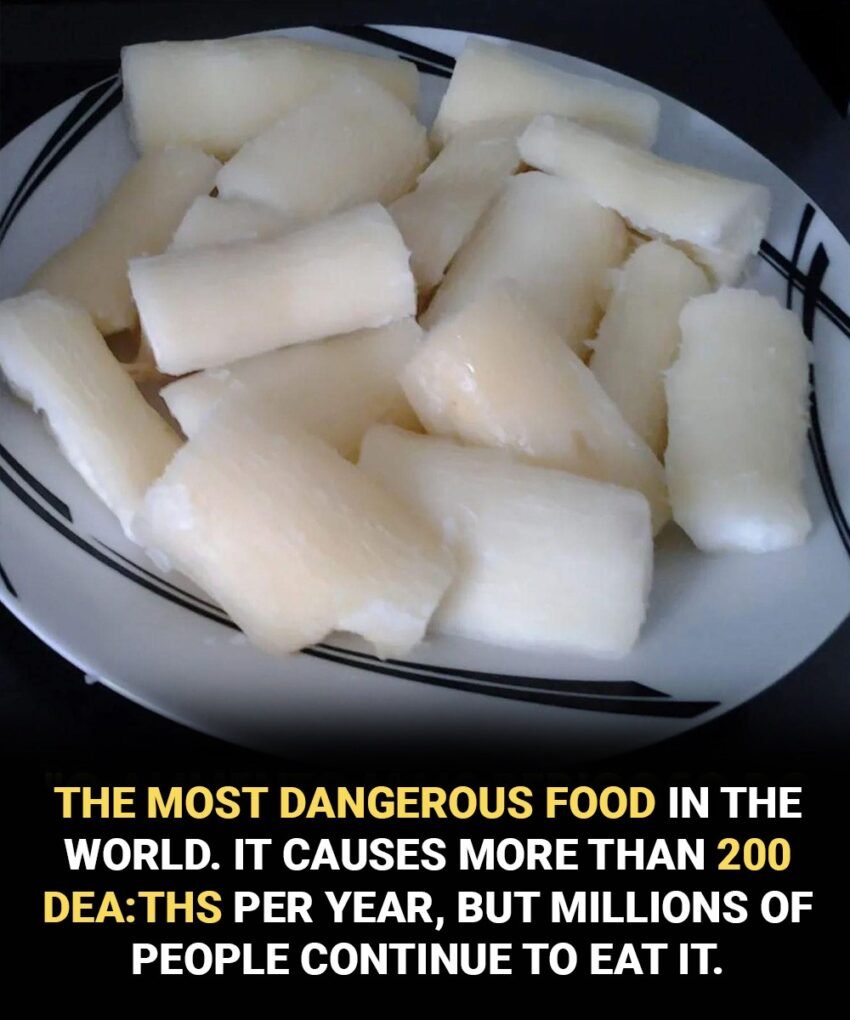
The description you’re referring to likely points to cassava, a widely consumed staple in many parts of the world that can be toxic if not prepared properly. Cassava contains cyanogenic compounds that release cyanide when eaten raw or insufficiently processed.
Why Cassava Can Be Toxic
- Cyanogenic glycosides: Naturally occurring in cassava roots and leaves.
- Improper preparation can lead to cyanide poisoning, causing nausea, dizziness, or in severe cases, death.
- Sweet cassava has lower cyanide levels, while bitter varieties are more dangerous.
Safe Preparation Methods
- Peeling: Remove the skin completely, where most toxins are concentrated.
- Soaking: Soak peeled cassava in water for several hours or overnight to leach out cyanide compounds.
- Boiling: Cook thoroughly in boiling water for at least 15–20 minutes.
- Fermentation (Optional): In some cultures, cassava is fermented before cooking to reduce toxicity further.
- Drying or Baking: Baking in the oven or drying can also reduce residual cyanide.
Simple Cooked Cassava Recipe
Ingredients:
- 2 medium cassava roots, peeled
- Water for boiling
- Salt (optional)
Instructions:
- Peel and cut cassava into chunks.
- Soak in water for 8–12 hours (optional but safer).
- Boil in fresh water for 20–25 minutes until soft and translucent.
- Drain and sprinkle lightly with salt. Serve as a side dish or mash like potatoes.
Optional Variations:
- Fry boiled cassava chunks for a crispy snack.
- Mash with coconut milk for a creamy side dish.
Important Tips
- Never eat raw cassava.
- Avoid using cassava that smells or tastes bitter, even after cooking.
- Children and people with weak immunity are especially vulnerable to cyanide toxicity.
Bottom Line
Cassava is a nutritious, energy-rich staple, but it must be properly peeled, soaked, and cooked to avoid toxicity. Following safe preparation methods allows you to enjoy it without health risks.
I can also provide a 3-step safety checklist for cassava preparation so you never risk cyanide exposure accidentally.