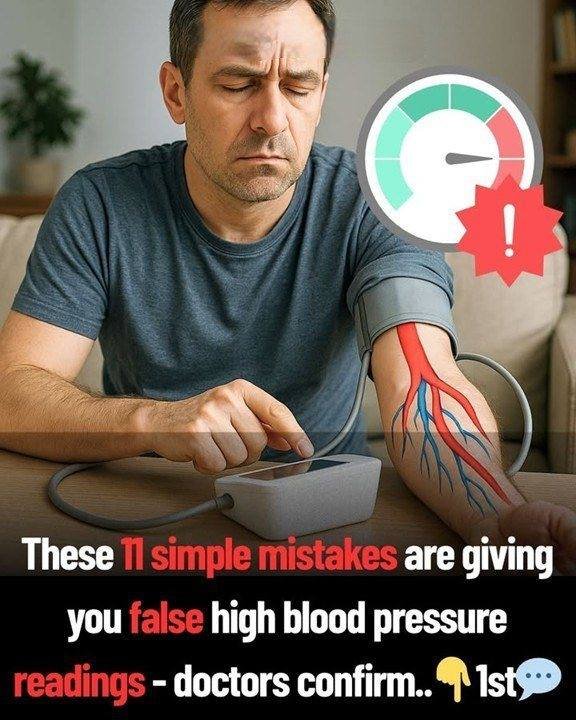
11 Simple Mistakes That Can Give You False High Blood Pressure Readings – Doctors Confirm
Introduction
Accurate blood pressure readings are essential for monitoring heart health. However, many people unknowingly make small mistakes that cause false high readings, potentially leading to unnecessary worry or treatment.
1. Measuring at the Wrong Time
- Blood pressure naturally fluctuates throughout the day.
- Taking measurements right after waking, eating, exercising, or drinking caffeine can give inflated readings.
2. Using the Wrong Cuff Size
- A cuff that is too small can artificially raise readings.
- Always use a cuff that fits your upper arm snugly, as recommended by the device.
3. Crossing Your Legs or Arms
- Crossing your legs while seated can increase systolic readings.
- Keep feet flat on the floor and arms supported at heart level.
4. Not Resting Before Measurement
- Jumping straight into a reading after walking or climbing stairs can elevate results.
- Sit quietly for 5 minutes before checking blood pressure.
5. Talking or Moving During Measurement
- Speaking, fidgeting, or tensing muscles can falsely raise numbers.
- Sit still and remain silent while the cuff inflates and deflates.
6. Incorrect Arm Position
- Arm too high or too low relative to heart level affects accuracy.
- Support your arm on a table or chair arm at heart height.
7. Full Bladder
- A full bladder can raise systolic pressure temporarily.
- Use the restroom before taking a reading.
8. Caffeine, Nicotine, or Alcohol
- Consuming any of these within 30 minutes prior can spike readings.
9. Stress or Anxiety
- Being nervous or anxious (“white coat syndrome”) can lead to temporarily high readings.
- Take deep breaths and relax for a few minutes before measurement.
10. Faulty or Uncalibrated Devices
- Old or poorly maintained blood pressure monitors can give inaccurate results.
- Regularly check your device against professional equipment.
11. Not Following the Same Routine
- Blood pressure readings are most useful when taken consistently—same arm, same time of day, same posture.
- Inconsistent methods can make results appear higher than they truly are.
Tips for Accurate Readings
- Take two or three readings a few minutes apart and record the average.
- Measure at the same time each day for reliable tracking.
- Share your readings with your doctor to interpret trends rather than single numbers.
Conclusion
Many common habits can create false high blood pressure readings. By avoiding these 11 mistakes, you can ensure your measurements are accurate and prevent unnecessary stress or treatment decisions.
If you want, I can also make a simple infographic-friendly checklist to follow before every blood pressure reading to get precise results every time.