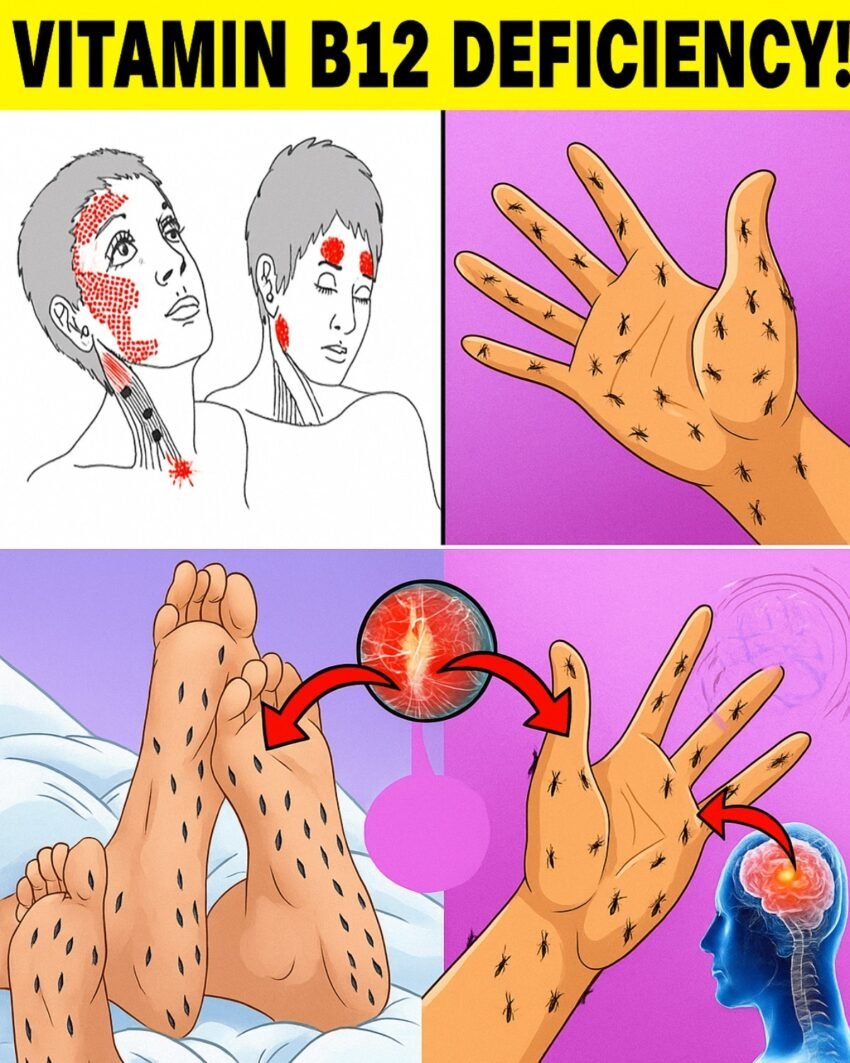
Vitamin B12 Deficiency: Symptoms You Should Never Ignore
Vitamin B12 is crucial for nerve health, red blood cell production, and DNA synthesis. A deficiency can develop slowly, and early signs are often subtle—but ignoring them can lead to serious complications.
Common Symptoms
- Fatigue and Weakness
- Low B12 can reduce red blood cell production, causing chronic tiredness and low energy.
- Tingling or Numbness in Hands and Feet
- Neuropathy caused by B12 deficiency can result in “pins and needles” sensations.
- Pale or Jaundiced Skin
- Insufficient red blood cells can make skin look pale or slightly yellow.
- Shortness of Breath or Dizziness
- Low oxygen-carrying capacity of the blood may lead to breathlessness, especially during physical activity.
- Cognitive Changes
- Memory problems, difficulty concentrating, or mood changes can occur in long-term deficiency.
- Glossitis and Mouth Ulcers
- Swollen, inflamed tongue and painful mouth sores are common early signs.
- Vision Problems
- Damage to the optic nerve can cause blurred or disturbed vision in severe cases.
- Unexplained Heart Palpitations
- The heart may beat faster to compensate for low red blood cell count.
Who Is at Risk?
- Vegetarians and vegans (B12 is mainly found in animal products)
- Older adults (absorption decreases with age)
- People with digestive disorders (like celiac, Crohn’s, or gastritis)
- Those on long-term acid-reducing medications or metformin
What to Do
- Get tested: A simple blood test can detect B12 deficiency.
- Dietary changes: Include meat, fish, dairy, eggs, or fortified plant-based foods.
- Supplements: Oral B12 tablets or sublingual forms; in severe cases, injections may be needed.
- Consult your doctor: Never self-diagnose—persistent symptoms need professional evaluation.
Early detection and treatment of B12 deficiency can prevent permanent nerve damage, cognitive decline, and severe anemia. If you notice any combination of these symptoms, it’s time to see a healthcare professional promptly.