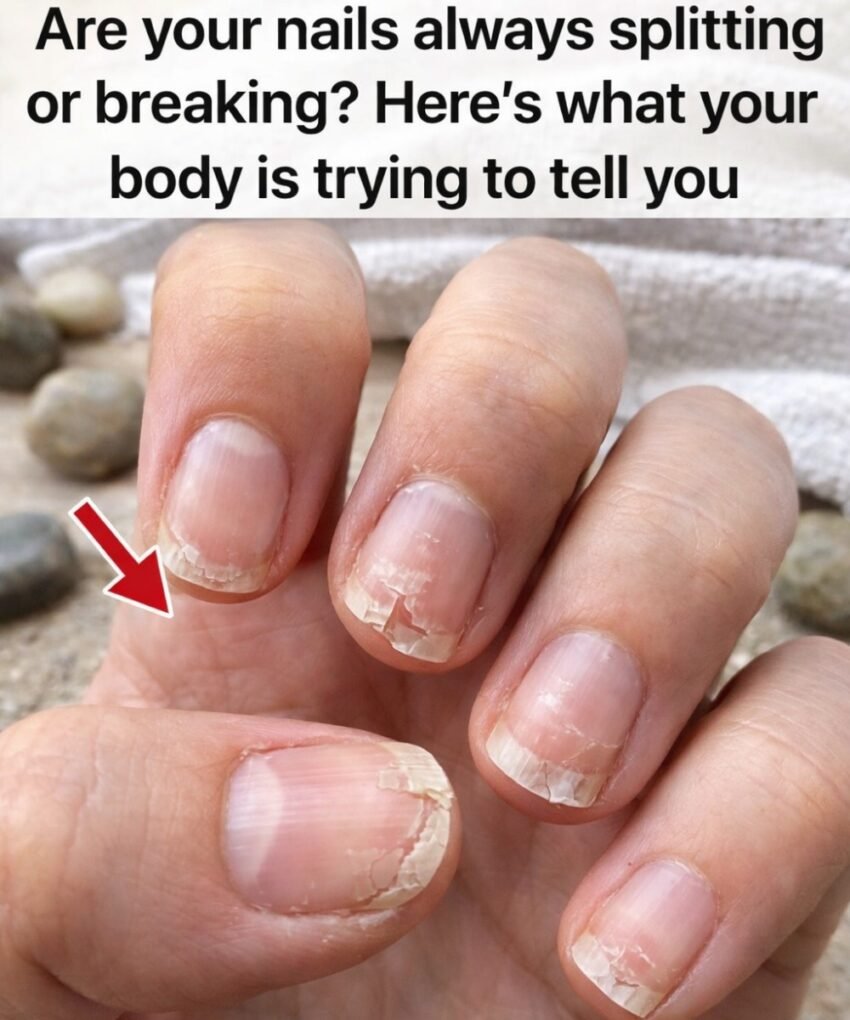
Why Your Nails Are Splitting or Breaking: What Your Body Is Trying to Tell You
Brittle, splitting, or breaking nails aren’t just cosmetic issues—they can be a signal that your body needs attention. Nails reflect overall health, and persistent problems may point to nutritional deficiencies, lifestyle factors, or underlying medical conditions.
Common Causes and What They Mean
- Protein Deficiency
- Nails are made of keratin, a type of protein. Weak, peeling nails may indicate you’re not getting enough protein in your diet.
- Biotin (Vitamin B7) Deficiency
- Biotin supports nail strength. Brittle nails may be improved by incorporating eggs, nuts, and seeds, or considering a supplement after consulting a doctor.
- Iron Deficiency (Anemia)
- Pale, thin, or spoon-shaped nails can signal low iron levels. Iron-rich foods like spinach, red meat, and legumes may help, along with professional guidance.
- Dehydration
- Dry nails and cuticles can result from insufficient water intake or excessive exposure to water and chemicals. Moisturize regularly and stay hydrated.
- Hypothyroidism
- Underactive thyroid can slow nail growth and make them brittle. Look for other signs like fatigue, weight changes, or cold intolerance.
- Vitamin or Mineral Deficiencies
- Lack of zinc, vitamin A, or vitamin C may lead to weak or ridged nails. A balanced diet can support nail health.
- Fungal Infections
- Thickened, discolored, or crumbly nails may indicate fungal infections that require medical treatment.
- Excessive Nail Treatments
- Frequent use of nail polish, gels, acrylics, or harsh nail removers can damage the nail plate, causing splitting or peeling.
- Skin Conditions
- Psoriasis or eczema affecting the nail bed can cause pitting, thickening, or brittleness.
- Aging
- Nails naturally become more brittle with age as circulation and moisture decrease.
Tips for Healthier Nails
- Keep nails trimmed and filed to prevent splits.
- Moisturize nails and cuticles daily.
- Wear gloves when using water, cleaning products, or chemicals.
- Maintain a nutrient-rich diet with adequate protein, vitamins, and minerals.
- Limit harsh nail products or give nails regular breaks.
Persistent nail problems should be evaluated by a healthcare professional, as they may be a sign of an underlying medical issue. Healthy nails often reflect a healthy body, so taking care of both is key.