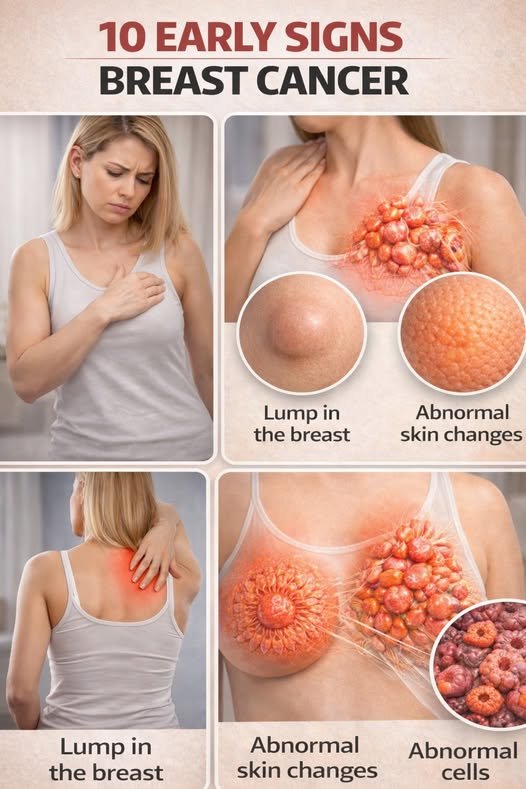
10 Warning Signs of Breast Cancer That Should Never Be Ignored
Breast cancer is one of the most common cancers affecting women worldwide. Detecting it early can greatly increase the chances of successful treatment. While not every breast change means cancer, certain symptoms should never be ignored. Paying attention to these warning signs and seeking medical advice when they appear can make a critical difference.
1. A New Lump in the Breast or Underarm
One of the most common early signs of breast cancer is a lump in the breast or underarm area. These lumps are often painless, hard, and have irregular edges, although some may feel soft or tender. Any new lump should always be checked by a healthcare professional.
2. Swelling in Part or All of the Breast
Breast swelling may occur even without a noticeable lump. If one breast suddenly appears larger or swollen compared to the other, it could be a warning sign that requires medical evaluation.
3. Changes in Breast Shape or Size
A sudden or unexplained change in the shape or size of one breast may indicate an underlying issue. If the change is noticeable and persists, it should be examined by a doctor.
4. Skin Irritation or Dimpling
Skin on the breast that looks dimpled, puckered, or similar to the texture of an orange peel can be a possible sign of breast cancer. These skin changes may occur when a tumor affects the tissue beneath the skin.
5. Breast or Nipple Pain
Although breast cancer is not always painful, persistent pain in the breast or nipple area that does not go away should be investigated.
6. Nipple Retraction
If the nipple suddenly turns inward or changes its normal position, it may be a sign of a problem in the underlying breast tissue.
7. Redness or Thickening of the Breast Skin
Red, inflamed, or thickened skin on the breast may resemble a rash or infection. However, if it does not improve with treatment, it could indicate a more serious condition.
8. Unusual Nipple Discharge
Discharge from the nipple that is not related to breastfeeding—especially if it is bloody or clear—should be evaluated by a healthcare professional.
9. Peeling or Flaking Skin Around the Nipple
Dry, peeling, or crusty skin around the nipple or areola may sometimes be associated with certain types of breast cancer.
10. Swollen Lymph Nodes
Swelling or lumps in the lymph nodes under the arm or around the collarbone may appear before a lump in the breast is noticeable.
When to See a Doctor
If you notice any of these symptoms, it is important to consult a healthcare professional as soon as possible. Early detection through regular self-exams, clinical exams, and screening tests can significantly improve treatment outcomes.
Final Thoughts
Not every breast change means cancer, but it is always better to be cautious. Being aware of your body and recognizing unusual changes can help ensure that potential problems are identified and treated early. Regular check-ups and screenings remain one of the best ways to protect breast health.