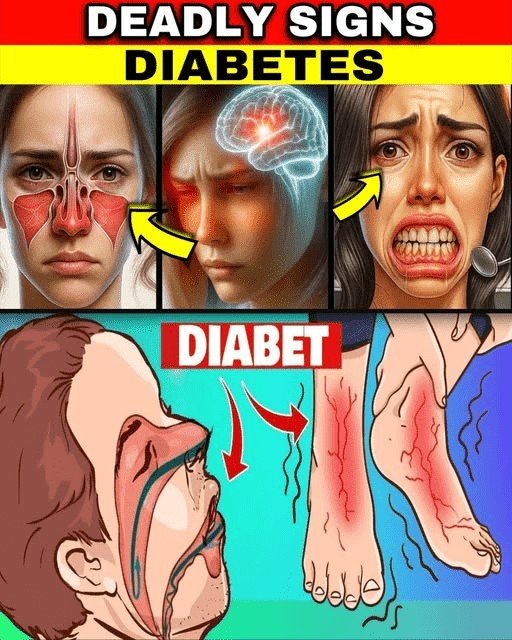
Diabetes doesn’t cause sudden death overnight in most cases — it damages the body slowly. But when blood sugar stays uncontrolled for a long time, the body can begin to shut down in serious and sometimes fatal ways.
Here are 8 warning signs that diabetes may be severely harming the body — followed by one life-saving tip.
1. Extreme, Unquenchable Thirst (Polydipsia)
When blood sugar is very high, your kidneys try to flush out excess glucose through urine.
This leads to:
- Constant thirst
- Dry mouth
- Frequent urination
If untreated, this can lead to dangerous dehydration.
2. Rapid, Unexplained Weight Loss
In uncontrolled diabetes (especially Type 1 diabetes), the body can’t use glucose for energy.
It starts breaking down fat and muscle instead — causing sudden weight loss and weakness.
3. Fruity-Smelling Breath
A sweet or fruity odor on the breath can signal diabetic ketoacidosis (DKA).
DKA is a life-threatening emergency most common in Type 1 diabetes.
Other DKA symptoms:
- Nausea and vomiting
- Rapid breathing
- Confusion
- Severe fatigue
This requires immediate medical care.
4. Slow-Healing Wounds or Infections
High blood sugar damages blood vessels and weakens the immune system.
Warning signs include:
- Foot ulcers
- Frequent skin infections
- Gum infections
Untreated wounds can lead to amputation or severe systemic infection.
5. Numbness or Burning in Hands and Feet
This is diabetic neuropathy — nerve damage from prolonged high blood sugar.
Symptoms may include:
- Tingling
- Sharp pains
- Loss of feeling
Loss of sensation increases the risk of unnoticed injuries and infections.
6. Vision Problems or Sudden Blindness
Blurred vision or dark spots can indicate diabetic retinopathy.
Advanced damage can lead to permanent blindness if untreated.
7. Chest Pain or Shortness of Breath
Diabetes dramatically increases the risk of heart disease and stroke.
Severe chest pain, pressure, or breathing difficulty may signal:
- Heart attack
- Heart failure
These are medical emergencies.
8. Confusion, Drowsiness, or Loss of Consciousness
Very high blood sugar can lead to:
- Hyperosmolar hyperglycemic state (HHS)
- Diabetic coma
Very low blood sugar (hypoglycemia) can also cause:
- Shaking
- Seizures
- Passing out
Both can be fatal without urgent treatment.
🚨 One Life-Saving Tip
Monitor and control your blood sugar consistently.
This includes:
- Checking glucose regularly
- Taking prescribed medication or insulin
- Following a structured meal plan
- Staying physically active
- Seeing your healthcare provider routinely
Early control prevents organ damage. Once complications start, they can become irreversible.
If you’d like, I can also provide:
- Early warning signs before severe damage occurs
- A simple daily diabetes control checklist
- A breakdown of what happens in the final stages
- Prevention strategies if you’re at risk
Let me know what would help most.