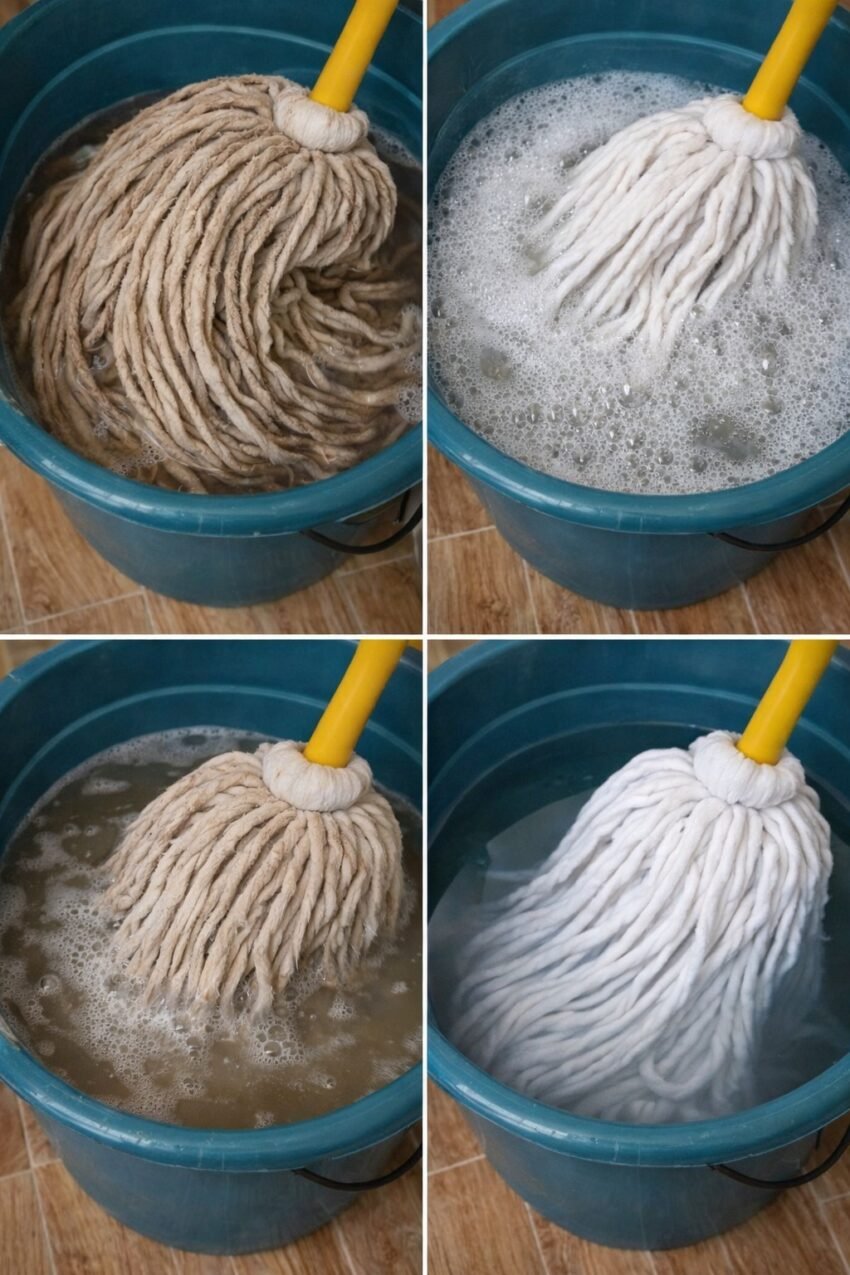
Very Dirty Mop? Do Not Throw It Away: Add One Simple Ingredient and It Will Be Like New Again
A dirty mop does not just look unpleasant — it can spread bacteria, unpleasant odors, and grime across your floors. Over time, mop fibers trap grease, dust, and germs, making regular rinsing ineffective.
Before you throw it away, try this simple and powerful cleaning method using one common household ingredient.
Why Mops Get So Dirty
Even after rinsing, mop heads can hold:
- Grease and oil residue
- Bacteria from bathroom and kitchen floors
- Mold and mildew from staying damp
- Bad odors caused by trapped moisture
If your mop smells sour or still looks gray after washing, it needs deep cleaning.
The One Ingredient That Works: White Vinegar
White vinegar is a natural disinfectant and deodorizer. Its acidity helps:
- Break down grease
- Kill many bacteria and mold spores
- Remove odors
- Loosen embedded dirt
It is inexpensive, effective, and safe for most mop materials.
How to Deep Clean Your Mop
What You Need
- 1 cup white vinegar
- 1 liter (4 cups) hot water
- A bucket or large container
Step-by-Step Instructions
- Heat water until very hot but not boiling.
- Pour hot water into a bucket.
- Add 1 cup of white vinegar.
- Submerge the mop head completely.
- Let it soak for 30–60 minutes.
- Rinse thoroughly with clean water.
- Wring out and allow it to air-dry completely in a well-ventilated area.
For extremely dirty mops, you can add 1 tablespoon of baking soda for extra deodorizing power.
For Machine-Washable Mop Heads
If your mop head is removable and machine safe:
- Place it in the washing machine
- Add 1 cup white vinegar to the detergent compartment
- Wash on a hot cycle
- Air-dry completely
Avoid using fabric softener, as it can coat fibers and reduce absorbency.
How Often Should You Clean Your Mop?
- After every heavy cleaning session
- At least once a week with regular use
- Immediately if it develops an odor
Allowing a mop to dry fully between uses is essential to prevent mold growth.
When to Replace a Mop
Even with proper care, replace your mop if:
- Fibers are falling apart
- It remains smelly after deep cleaning
- The strands are stiff and no longer absorbent
Final Thoughts
A dirty mop does not always need to be replaced. With a simple vinegar soak, you can remove buildup, eliminate odors, and restore cleanliness.
Regular maintenance not only saves money but also ensures your floors are truly clean instead of being recontaminated.