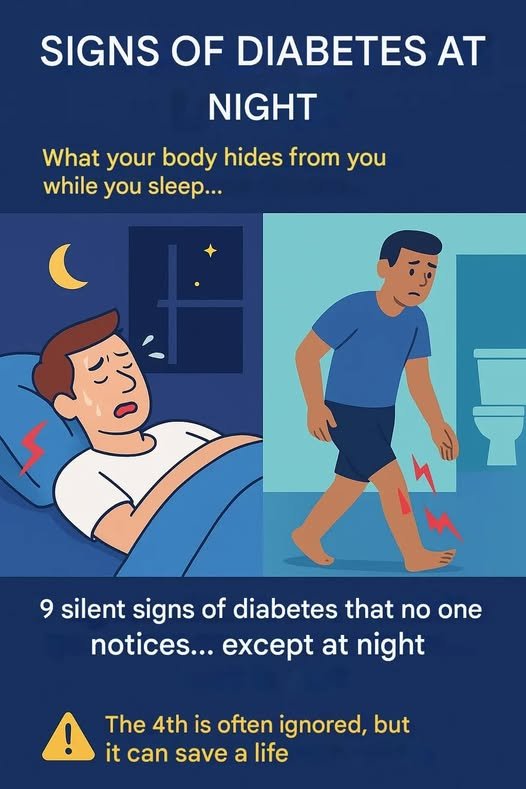
9 Signs of Diabetes That Appear at Night: What You Need to Know
Introduction
Diabetes affects how your body processes blood sugar, and its symptoms can become more noticeable at night. Recognizing these signs is important, as nighttime symptoms may indicate poorly controlled blood sugar or even undiagnosed diabetes. Early detection helps prevent serious complications.
1. Frequent Nighttime Urination
Excess glucose in the blood forces the kidneys to work harder, causing increased urine production. This often leads to multiple trips to the bathroom during the night.
2. Excessive Thirst at Night
As the body loses fluids through frequent urination, dehydration sets in, triggering strong thirst that may be more noticeable at night.
3. Fatigue Upon Waking
Even after a full night’s sleep, high blood sugar can interfere with restorative sleep, leaving you feeling unusually tired in the morning.
4. Night Sweats
High glucose levels can disrupt the body’s temperature regulation, causing sweating at night even in a cool environment.
5. Tingling or Numbness in Hands and Feet
Diabetic neuropathy often becomes more noticeable at night when the body is at rest, causing tingling, burning, or numb sensations in the extremities.
6. Dry Mouth and Throat
Dehydration from nighttime urination, combined with reduced saliva production, can cause a dry mouth or sore throat while sleeping.
7. Restlessness or Trouble Sleeping
Elevated blood sugar may lead to discomfort, headaches, or heart palpitations, making it difficult to fall or stay asleep.
8. Blurred Vision
High blood sugar can cause fluid shifts in the eyes, leading to temporary blurred vision that may be more noticeable at night or in the morning.
9. Cravings or Hunger at Night
Rapid changes in blood sugar can trigger sudden hunger or cravings, particularly for sugary foods, disrupting sleep and contributing to further glucose spikes.
Why Diabetes Symptoms Worsen at Night
Several factors can contribute to nighttime symptom flare-ups:
- Late meals or snacks high in carbohydrates
- Reduced insulin sensitivity in the evening
- Hormonal changes like the dawn phenomenon
- Missed or delayed diabetes medication
When to Seek Medical Advice
Nighttime symptoms that occur regularly should prompt a consultation with a healthcare provider. Persistent high blood sugar increases the risk of complications including nerve damage, kidney disease, cardiovascular problems, and vision issues.
Conclusion
Recognizing nighttime signs of diabetes is crucial for early detection and effective management. Paying attention to symptoms like frequent urination, excessive thirst, fatigue, and neuropathy can help individuals take timely action, maintain better blood sugar control, and protect overall health.
If you want, I can also create a shorter, reader-friendly version for social media or blog posts that highlights these nine signs in an easy-to-scan format.