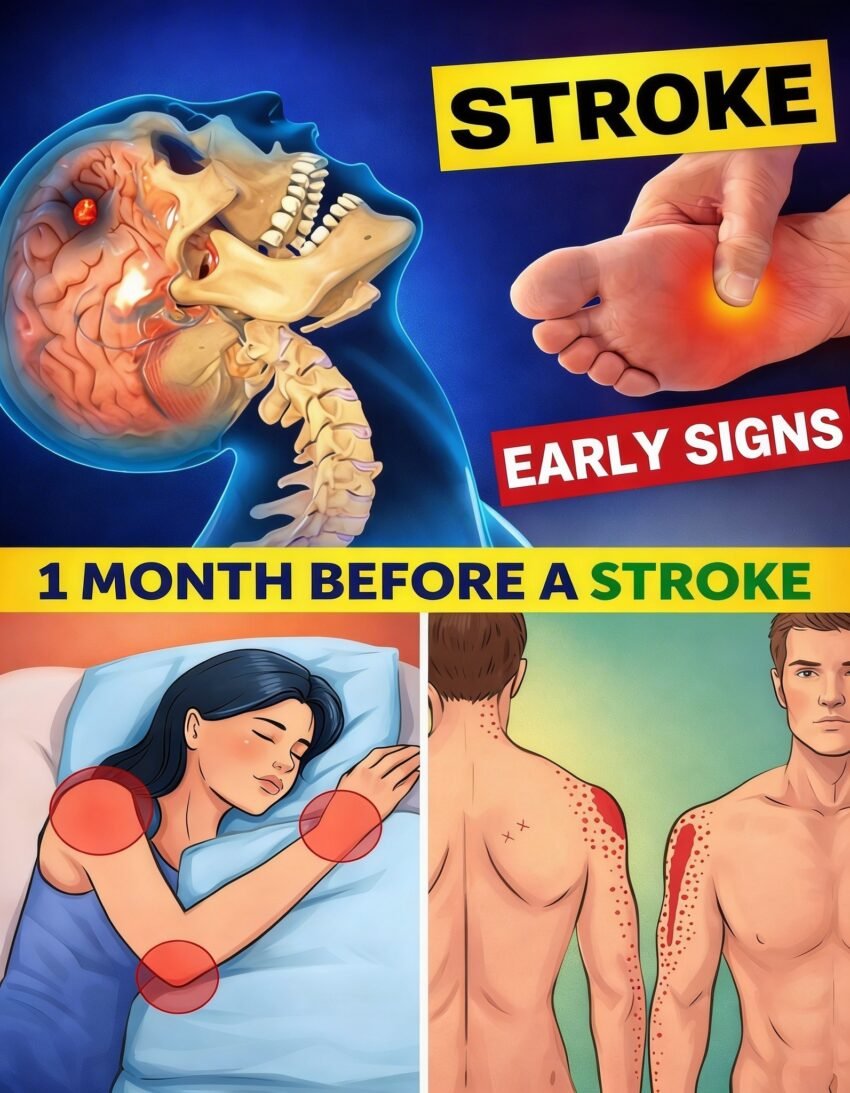
A stroke is a medical emergency. It happens when blood flow to the brain is blocked (ischemic stroke) or when a blood vessel ruptures (hemorrhagic stroke). Many strokes are linked to conditions like Hypertension, Atrial fibrillation, Type 2 diabetes, and Hyperlipidemia.
Sometimes, warning signs appear days or even weeks before a major stroke — often as a transient ischemic attack (TIA), also called a “mini-stroke.”
Below are 8 warning signs that may occur up to a month before a stroke — followed by 9 evidence-based prevention tips.
⚠️ 8 Warning Signs of Stroke
1. Sudden Weakness or Numbness (Especially One Side)
Weakness in the face, arm, or leg — particularly on one side — is a classic red flag.
2. Temporary Vision Loss or Blurred Vision
Sudden dimness, double vision, or vision loss in one eye can signal reduced blood flow to the brain.
3. Slurred Speech or Trouble Speaking
Difficulty forming words or understanding speech may be a TIA warning.
4. Sudden Severe Headache
A sudden, intense headache with no known cause can signal a hemorrhagic stroke.
5. Dizziness or Loss of Balance
Trouble walking, loss of coordination, or unexplained falls.
6. Facial Drooping
One side of the face may sag or feel numb.
7. Brief Confusion or Memory Problems
Sudden mental fog, confusion, or difficulty understanding simple instructions.
8. Short Episodes of Symptoms That Go Away
If symptoms resolve within minutes to hours, it may be a transient ischemic attack (TIA) — a major warning sign that a full stroke could follow.
🚨 Remember FAST
Stroke symptoms often appear suddenly. Use FAST:
- Face drooping
- Arm weakness
- Speech difficulty
- Time to call emergency services
Immediate treatment can prevent permanent brain damage.
🛡 9 Tips to Help Prevent Stroke
1. Control Blood Pressure
Managing Hypertension is the single most important prevention step.
2. Manage Blood Sugar
Proper control of Type 2 diabetes reduces vessel damage.
3. Lower Cholesterol
Treating Hyperlipidemia helps prevent artery blockages.
4. Treat Atrial Fibrillation
Proper management of Atrial fibrillation lowers clot risk.
5. Quit Smoking
Smoking doubles stroke risk by damaging blood vessels.
6. Exercise Regularly
Aim for at least 150 minutes of moderate activity weekly.
7. Maintain a Healthy Weight
Abdominal obesity increases stroke and heart disease risk.
8. Limit Alcohol
Excessive drinking raises blood pressure and stroke risk.
9. Eat a Heart-Healthy Diet
Focus on:
- Vegetables and fruits
- Whole grains
- Lean proteins
- Healthy fats (olive oil, nuts)
Limit salt, processed foods, and added sugars.
🔴 Seek Immediate Help If You Notice:
- Sudden weakness or numbness
- Trouble speaking
- Vision changes
- Severe unexplained headache
Even if symptoms disappear, get medical evaluation immediately — TIAs often precede a full stroke within days or weeks.
If you’d like, I can also provide:
- Early silent risk factors most people ignore
- A 7-day stroke-prevention meal plan
- Differences between stroke and heart attack symptoms
- A simple daily routine to protect brain health
Let me know what would be most helpful.