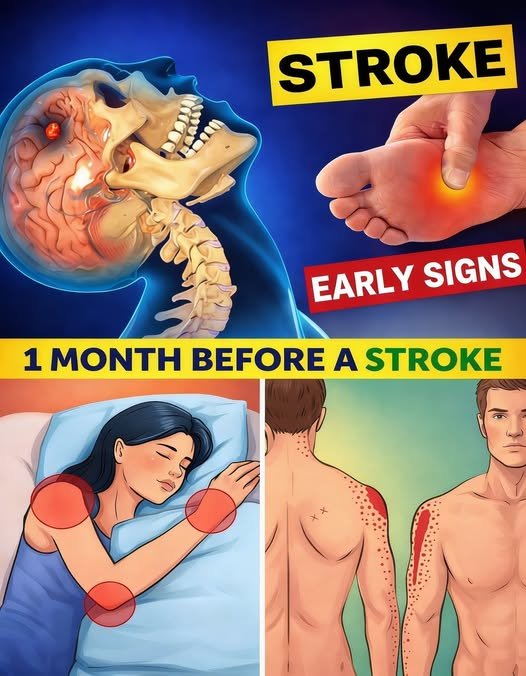
8 Warning Signs of Stroke One Month Before + 9 Powerful Tips to Prevent It
Stroke often seems sudden, but in many cases, the body sends warning signs weeks beforehand. Recognizing early symptoms and taking preventive steps can dramatically reduce risk and improve outcomes.
8 Warning Signs of Stroke One Month Before
Not everyone experiences early warning signs, but the following symptoms may occur days or weeks before a stroke:
1. Transient Ischemic Attacks (Mini-Strokes)
Often called a TIA, this is a temporary blockage of blood flow to the brain. Symptoms may last a few minutes to a few hours and then disappear. A TIA is a major red flag and requires immediate medical attention.
2. Sudden Weakness or Numbness
Especially on one side of the body, including the face, arm, or leg.
3. Slurred or Difficult Speech
Trouble speaking clearly or understanding speech can signal reduced blood flow to the brain.
4. Severe Headaches
A sudden, intense headache with no known cause may indicate a possible stroke risk.
5. Vision Problems
Blurred vision, double vision, or temporary loss of vision in one or both eyes.
6. Dizziness or Loss of Balance
Sudden coordination issues, difficulty walking, or unexplained falls.
7. Confusion or Memory Problems
Unusual mental fog, difficulty concentrating, or sudden confusion.
8. Facial Drooping
One side of the face may droop or feel numb. Ask the person to smile — unevenness can be a warning sign.
If any of these symptoms occur, seek emergency medical care immediately. Early treatment can prevent permanent brain damage.
9 Powerful Tips to Help Prevent Stroke
While not all strokes are preventable, lifestyle choices significantly reduce risk.
1. Control Blood Pressure
High blood pressure is the leading cause of stroke. Regular monitoring and proper management are critical.
2. Manage Blood Sugar
Diabetes increases stroke risk. Keep blood sugar levels within recommended ranges.
3. Lower Cholesterol
Excess LDL cholesterol can lead to plaque buildup in arteries.
4. Quit Smoking
Smoking damages blood vessels and increases clot formation.
5. Exercise Regularly
Aim for at least 150 minutes of moderate activity per week.
6. Maintain a Healthy Weight
Obesity contributes to high blood pressure, diabetes, and heart disease.
7. Eat a Heart-Healthy Diet
Focus on:
-
Fruits and vegetables
-
Whole grains
-
Lean proteins
-
Healthy fats (such as olive oil and fatty fish)
-
Reduced salt and processed foods
8. Limit Alcohol Intake
Excessive alcohol increases blood pressure and stroke risk.
9. Manage Stress
Chronic stress may contribute to high blood pressure and heart strain. Practice relaxation techniques and prioritize sleep.
Know the FAST Method
If you suspect a stroke, remember FAST:
-
Face drooping
-
Arm weakness
-
Speech difficulty
-
Time to call emergency services
Immediate medical attention can save brain tissue and lives.
Final Thoughts
Stroke is a serious medical emergency, but early warning signs and proactive lifestyle changes can make a powerful difference. If you or someone you know experiences symptoms — even if they go away — consult a healthcare professional immediately.
Prevention and awareness remain the strongest tools for protecting long-term brain health.